Vivien Thomas Saved “Blue Babies”

In Tiny Stitches: The Life of Medical Pioneer Vivien Thomas, author Gwendolyn Hooks tells the story of how Vivien Thomas developed a life-saving medical procedure. The surgical technique allowed babies born with the condition tetralogy of Fallot, or blue baby syndrome, to live.
thomas_vivien

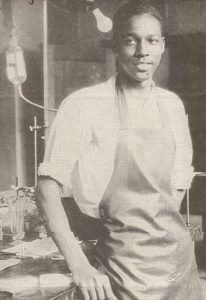
Vivien Thomas

Vivien Thomas was born in 1910 into the segregated American South. He worked with his carpenter father saving money for college and dreamed of a career in medicine. But when the stock market crashed in 1929, he lost his savings.

Not giving up on his dream, he interviewed for a position at the Vanderbilt University Hospital. He would work with Dr. Alfred Blalock as a surgical research technician. Vivien was not told when hired that he would receive less pay than the white research technicians. His official classification was “janitor.”

Vivien quickly learned to conduct experiments independently. He became an indispensable assistant to Dr. Blalock. The doctor was then offered the Chief of Surgery position at Johns Hopkins Hospital. He accepted only if Vivien would be his research technician.

The move to Baltimore from Nashville was difficult for Vivien and his family. They faced even more discrimination. But as Gwendolyn Hooks writes: “Vivien refused to let the prejudice of others interfere with his work.”
alfred_blalock_and_helen_taussig

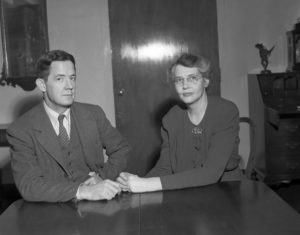
Drs. Blalock and Taussig

Dr. Helen Taussig, a pediatric cardiologist asked Dr. Blalock if he could devise a procedure for her young heart patients. The procedure would involve open-heart surgery. Dr. Blalock gave the assignment to Vivien.

Vivien studied the hearts of blue babies in a pathology museum. He noted the defects that prevented blue blood from entering the lungs for oxygenation. He decided that a procedure that he and Dr. Blalock had tried at Vanderbilt would be the answer.

A shunt would connect an artery from the heart with an artery going to the lungs. Vivien next made a small needle. It could be used on babies to suture the arteries. Then Vivien successfully performed the procedure on animals.
hqdefault

Vivien Thomas Stands Behind Dr. Blalock

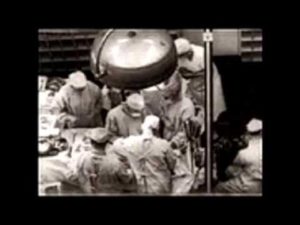
The first procedure on a baby was conducted on November 29, 1944. Vivien stood on a stool behind Dr. Blalock directing the successful operation. Over 150 times, he stood behind Dr. Blalock. He answered the doctor’s questions while the doctor performed the surgery . The procedure became known as the Blalock-Taussig shunt.

The Drs. Blalock and Taussig received national and international recognition. They were nominated for a Nobel prize. But Vivien Thomas’s name was never mentioned.
vtt

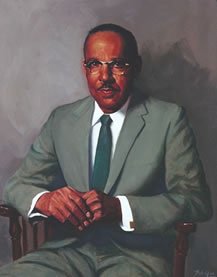
Vivien Thomas’s Portrait At Johns Hopkins

It wasn’t until 1971, that Vivien Thomas was publicly recognized for his contribution to medical science. Today, his portrait hangs in the Blalock Building at Johns Hopkins directly across the hall from Dr. Blalock’s portrait. In 1976, Johns Hopkins University honored Vivien Thomas with an honorary Doctor of Laws degree.

With author Gwendolyn Hooks’s book Tiny Stitches, children can read and learn about Vivien Thomas a dedicated medical researcher. He overcame racial prejudice to save the lives of “blue babies.” Visit Gwendolyn Hooks at: http://gwendolynhooks.com

thomas_tall

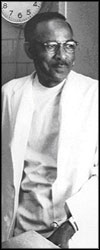
Vivien Thomas

If you like this article, then please consider sharing it and leaving a comment below. Thank you! Barbara Lowell, Children’s Author

To learn more, visit Johns Hopkins at: http://www.medicalarchives.jhmi.edu/vthomas.htm

Jason Wright, a future Ken Burns, narrates this wonderful video.

Books For Kids: Baseball

Who Is Derek Jeter?

By Gail Herman, Illustrated by Andrew Thomson

When Derek Jeter was eight years old, he announced that he was going to play baseball for the New York Yankees. Jeter earned the attention of major league scouts in high school and was drafted to the New York Yankees in 1992. Named Rookie of the Year, he helped the Yankees win the World Series five times, and became team captain in 2003. With his good looks, easygoing personality, and sense of humor, Derek has always been a fan favorite. Retiring from baseball in 2014, Derek Jeter leaves behind a legacy.

51QUhNccxeL

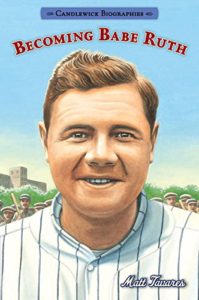
Becoming Babe Ruth

by Matt Tavares

Before he is known as the Babe, George Herman Ruth is just a boy who lives in Baltimore and gets into a lot of trouble. But when he turns seven, his father brings him to the gates of Saint Mary’s Industrial School for Boys. His life is changed forever.

At Saint Mary’s, he’s expected to study hard and follow a lot of rules. But there is one good thing about Saint Mary’s. Almost every day, George gets to play baseball. Under the watchful eye of Brother Matthias, George evolves as a player and as a man. And when he sets off into the wild world of big-league baseball, the school, the boys, and Brother Matthias are never far from his heart.

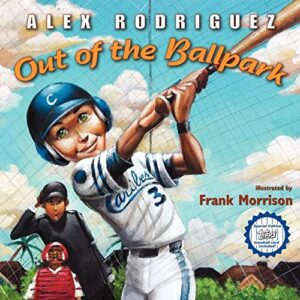
Out of the Ballpark

By Alex Rodriguez, Illustrated by Frank Morrison

Before he hit 400 home runs…
Before he was named
American League MVP…
Before he was AROD to
millions of fans…
He was Alex.

Just a kid who wanted to play baseball more than anything else in the world. Baseball superstar Alex Rodriguez has drawn on his own childhood experiences to create this exciting picture book. It’s the story of a boy named Alex who knows what it’s like to swing at a wild pitch or have a ball bounce right between his legs. Alex is determined not to let his mistakes set him back—even if it means getting up at the crack of dawn to work on his hitting and fielding before school each day!

Baseball’s Greatest Hitters From Ty Cobb to Miguel Cabrera

By S.A. Kramer, Illustrated by Jim Campbell

This Step into Reading Step 5 Sports Reader profiles the greatest hitters in baseball: Ted Williams, Babe Ruth, Ty Cobb, Hank Aaron. Now updated to include Miguel Cabrera, who made baseball history by achieving the Triple Crown in 2012, and up-and-comer Mike Trout. This star-studded survey remains contemporary by addressing the use of performance-enhancing drugs by some of baseball’s top stars.

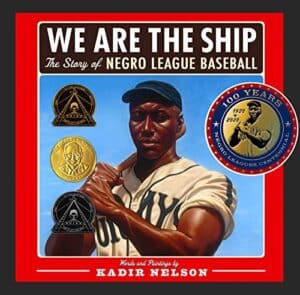
We Are the Ship: The Story of Negro League Baseball

By Kadir Nelson

The story of Negro League baseball is the story of gifted athletes and determined owners, of racial discrimination and international sportsmanship, of fortunes won and lost; of triumphs and defeats on and off the field. It is a perfect mirror for the social and political history of black America in the first half of the twentieth century. But most of all, the story of the Negro Leagues is about hundreds of unsung heroes who overcame segregation, hatred, terrible conditions, and low pay to do one thing they loved more than anything else in the world: play ball.


Baseball Biographies for Kids: The Greatest Players from the 1960s to Today

By Dean Burrell

It’s the bottom of the ninth, bases are loaded, and your team is down by three―who do you want coming up to bat? Baseball Biographies for Kids answers this question and more!

Bursting with statistics and impressive feats from the greatest players of the last 60 years, this lineup of inspirational baseball biographies shows you what it takes to be a real MVP. Discover the ultimate dream team as you explore the best pros for each position. You’ll also get quick looks into some truly legendary baseball players and lots of fun facts!

51yqKdL0XCL

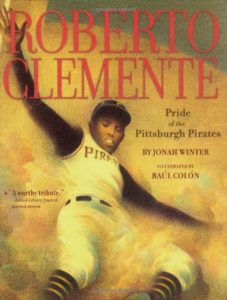
Roberto Clemente: Pride of the Pittsburgh Pirates

by Jonah Winter, Illustrated by Raul Colon

On an island called Puerto Rico, there lived a little boy who wanted only to play baseball. Although he had no money, Roberto Clemente practiced and practiced until–eventually–he made it to the Major Leagues. America!

As a right-fielder for the Pittsburgh Pirates, he fought tough opponents–and even tougher racism–but with his unreal catches and swift feet, he earned his nickname, “The Great One.” He led the Pirates to two World Series, hit 3,000 hits, and was the first Latino to be inducted into the Hall of Fame. But it wasn’t just baseball that made Clemente legendary–he was also a humanitarian dedicated to improving the lives of others.

614%2BGK0qTSL

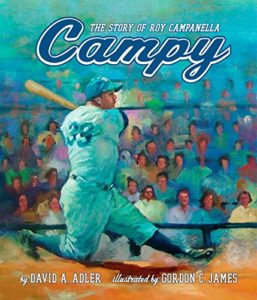
Campy: The Story of Roy Campanella

by David A. Adler, Illustrated by Gordon C. James

Roy Campanella loved baseball. A professional player from the age of fifteen, he later became the first African-American catcher to integrate Major League Baseball. Fans and players adored Campy for his good nature, and cheered his multiple MVP awards as a Brooklyn Dodger. But in 1958, his career ended when a car accident left him a quadriplegic. Refusing to give in to self-pity, Campy became a Dodgers coach, held baseball clinics for teenagers, and bravely advocated for the disabled.

51AZMB2m8LL

You Never Heard of Sandy Koufax?

by Jonah Winter, Illustrated by Andre Carrilho

An old-timer tells us what made Sandy Koufax such an amazing baseball player. We learn that the beginning of his career with the Brooklyn Dodgers was rocky, that he was shy with his teammates, and experienced discrimination as one of the only Jews in the game.

We hear that he actually quit, only to return the next season—different—firing one rocket after another over the plate. We watch him refuse to play in the 1965 World Series because it is a Jewish high holy day. And we see him in pain because of an overused left arm, eventually retiring at the peak of his career. Finally, we are told that people are still “scratchin’ their heads over Sandy,” who remains a modest hero and a mystery to this day.

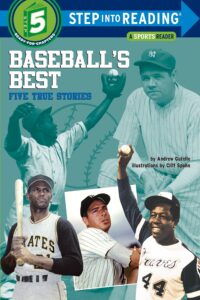
Baseball’s Best

By Andrew Gutelle, Illustrated by Cliff Spohn

Babe Ruth, Joe DiMaggio, Jackie Robinson, Roberto Clemente, and Hank Aaron—five amazing baseball legends. From the first black man to play major-league ball to the longest hitting streak ever, these are some of the game’s most inspiring stories. Find out what unforgettable feats won each player a place in the Baseball Hall of Fame.

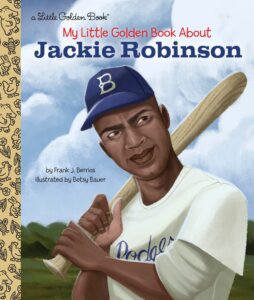
My Little Golden Book About Jackie Robinson

By Frank Berrios, Illustrated by Betsy Bauer

This Little Golden Book captures the essence of Jackie Robinson for the littlest readers. Lively text and compelling artwork detail Robinson’s remarkable journey from childhood, to playing for the Negro Leagues, to then becoming the first African American to play in Major League Baseball in the modern era. Little ones will be inspired by the many challenges Robinson gracefully rose to, while they learn important baseball and civil rights history.

51Ok2SzeN1L

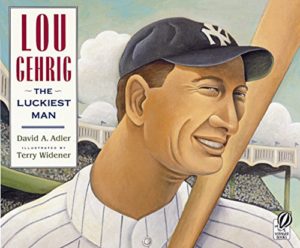
Lou Gehrig: The Luckiest Man

by David A. Adler, Illustrated by Terry Widener

Lou Gehrig’s perseverance is legendary. During fourteen years as a first baseman for the New York Yankees, he played in a record 2,130 consecutive games, earning himself the nickname Iron Horse. Lou loved baseball and considered himself a very lucky man, even though on his thirty-sixth birthday he was diagnosed with a fatal disease.

51EoeQpKEGL

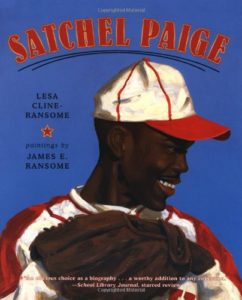
Satchel Paige

by Lesa Cline-Ransome, Illustrated by James E. Ransome

No one pitched like Leroy “Satchel” Paige. Fans packed the stands to see how many batters he could strike out in one game. He dazzled them with his unique pitching style, and he even gave nicknames to some of his trademark pitches — there was the “hesitation,” his magic slow ball, and the “bee ball,” named because it would always “be” where he wanted it to be.

Follow Satch’s career as he begins playing in the semipros and goes on to become the first African American to pitch in a major League World Series, and the first Negro Leaguer to be inducted into the Baseball Hall of Fame.

A1vpvfGImXL

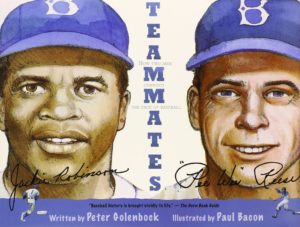
Teammates

by Peter Golenbock, Illustrated by Paul Bacon

The story of how Jackie Robinson became the first black player on a Major League baseball team when he joined the Brooklyn Dodgers in the 1940s, and how on a fateful day in Cincinnati, Pee Wee Reese took a stand and declared Jackie his teammate. 

51BMDYsDafL

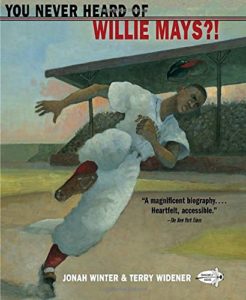
You Never Heard of Willie Mays?

by Jonah Winter, Illustrated by Terry Widener

Many believe baseball great Willie Mays to be the best player that ever lived. He hit 660 home runs (fourth best of all time), had a lifetime batting average of .302, and is second only to Babe Ruth on The Sporting News‘s list of “Baseball’s 100 Greatest Players.”

51hOQIj2-bL

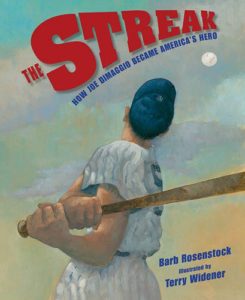
The Streak: How Joe DiMaggio Became America’s Hero

by Barb Rosenstock, Illustrated by Terry Widener

In the summer of 1941, Yankee center fielder Joe DiMaggio and his favorite bat, Betsy Ann, begin the longest hitting streak in baseball history. But when Betsy Ann goes missing, will DiMaggio keep hitting? Set on the brink of World War II, this is a spellbinding account of a sports story that united the country and made DiMaggio a hero, at a time when one was profoundly needed.

The book descriptions used are primarily from the publishers.

If you like this post, then please consider sharing it and leaving a comment below. Thank you! Barbara Lowell, Children’s Author

You may like: Kids Books Girls Playing Baseball https://barbaralowell.com/kids-books-girls-playing-baseball

Books For Kids Jackie Robinson https://barbaralowell.com/books-for-kids-jackie-robinson

Barnstorming Bessie Coleman

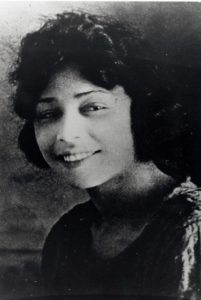
Bessie Coleman, born to Texas sharecroppers in 1892, wanted more out of life than picking cotton. She wanted to “amount to something.” One of thirteen children, Bessie left Texas for Chicago in 1915, to live with her brothers Walter and John.

Bessie attended a beauty school and became a manicurist. She worked at the White Sox Barber Shop during World War I. Bessie listened to the daring stories told by pilots returning from Europe. Her brother, John, who had served in WWI teased her that French women were superior because they could fly planes. Bessie decided she would fly too. But no U.S. aviation schools would accept her. She was an African American woman.

SI-88-7983_640

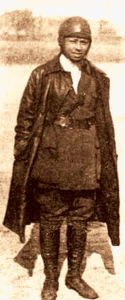
Bessie Coleman

Bessie enjoyed reading the African American newspaper the Chicago Defender. The publisher, Robert S. Abbott, learned about Bessie’s dream to fly. He suggested that she learn French and apply for training at a French flight school. Bessie quickly learned the language and was accepted by a leading aviation school in France.

coleman_bessie

Bessie Coleman

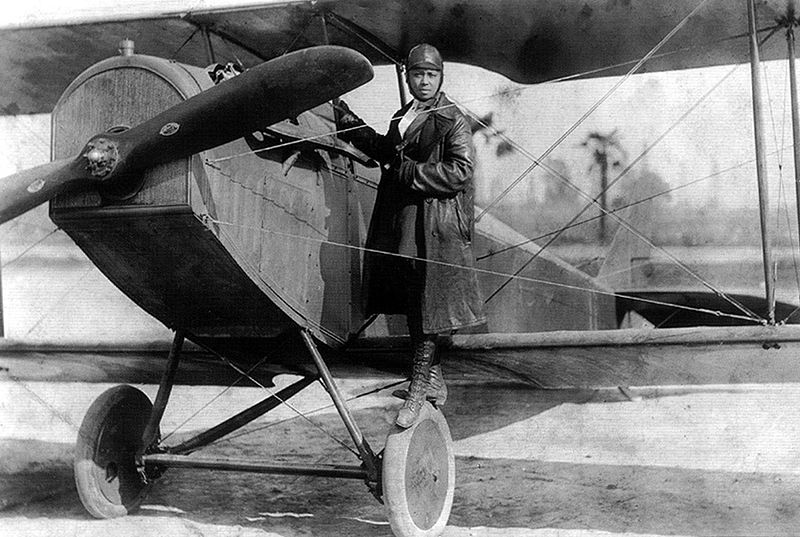
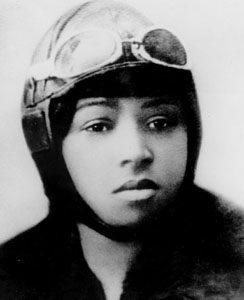
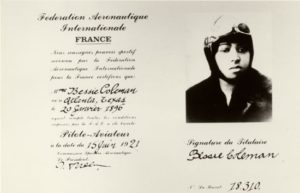
Learning to fly the Nieuport Type 82 biplane required skill and daring. Although Bessie witnessed the death of a fellow student, she continued to fly determined to succeed. She trained for seven months. On June 15, 1921, Bessie received her pilot’s license. She was the first African American woman to do so. And the first African American to receive an International pilot’s license.

BLACK%20HISTORY%20MONTH%202016%20BESSIE%20COLEMAN%204

Returning home, Bessie was unable to find employment as an aviator. She traveled again to Europe for advanced training and to learn aerial stunt flying. Bessie was considered by experienced European pilots to be an exceptional flyer.

Returning again to the U.S., Bessie had a new dream. She would open a flight school to train African American women. Bessie needed money to finance this. With her skill and training, she became a  barnstormer. In the early days of flying, pilots toured the country performing stunts at exhibitions to earn a living. They were called barnstormers.ColemanBessie5

Bessie Coleman In Her Uniform

Bessie first appeared at an air show in Garden City, Long Island. She dressed in a military style uniform. She performed loops and spirals over the crowd. The show billed Bessie as “the world’s greatest woman flier.”

Bessie appeared in more air shows. In 1923, she was able to purchase a Curtiss JM4 military surplus biplane known as a Jenny. Bessie flew in her Jenny before a Los Angeles crowd in June that year. Her plane stalled and crashed. Bessie survived the accident, but was left with a broken leg and three broken ribs.  

On June 19, 1925, Bessie returned to the air in Texas to celebrate Juneteenth. Texas slaves were effectively freed from slavery by U.S. troops on June 19, 1865. Beginning that day, Bessie refused to perform in the south if African Americans were banned from attendance.

To help raise funds for her flight school, Bessie spoke to audiences about flying. She encouraged African Americans to consider flying too.

Bessie never realized her dream of opening a flight school. She purchased another Jenny biplane in 1926. Many people including her family considered it to be in poor condition. On April 30, 1926, Bessie flew as a passenger in the plane scouting a landing site for a parachute jump. The pilot, William Wills, lost control. Bessie and Wills like many early aviators lost their lives flying.

Bessie Coleman, called “Brave Bess” inspired women to live their dreams as she had lived hers. In 2006, she was inducted into the National Aviation Hall of Fame.

If you like this post, then please consider sharing it and leaving a comment below. Barbara Lowell, Children’s Author

You may also like: Amelia Earhart Crosses The Atlantic https://www.amelia-earhart-crosses-atlantic

Harriet Quimby America’s First Female Licensed Pilot https://barbaralowell.com/harriet-quimby-pilot

Elinor Smith Teenage Flying Flapper https://barbaralowell.com/elinor-smith-flying-flapper 

Books For Kids:

51V7418JC2L

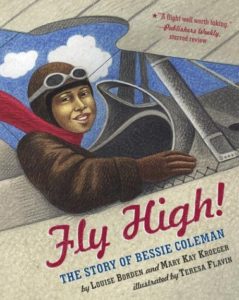
Fly High!

By Louise Borden and Mary Kay Kroeger

Illustrated by Teresa Flavin

51NRGEhdSrL

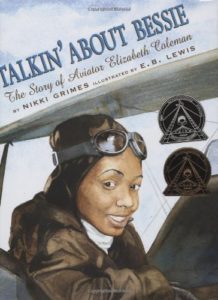
Talkin’ About Bessie The Story of Aviator Elizabeth Coleman

By Nikki Grimes, Illustrated by E.B. Lewis

Elinor Smith, Teenage Flying Flapper

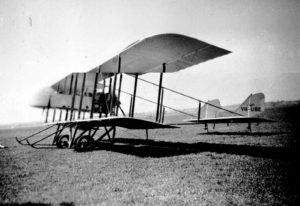
Six-year-old Elinor Smith persuaded her father to let her fly in a Farman pusher biplane near her home on Long Island, New York. “By the time the pilot touched the wheels gently to the earth, I knew my future in airplanes and flying was as inevitable as the freckles on my nose.” 

160600-large

Farman pusher biplane

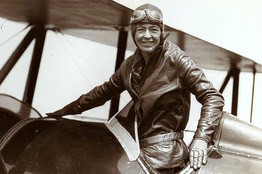
Elinor took flying lessons at age 10. Sitting on a pillow with her feet resting on blocks tied to the controls, Elinor learned to fly and by age 12, “I could do everything but take off and land.” She soloed a plane at age 15 and became the youngest licensed pilot at 16. Her license was signed by Orville Wright.

Elinor received worldwide attention when she was challenged to fly under one of New York’s East River bridges. Elinor not only met the challenge in 1928 at age 17, she flew the Waco 10 plane under four bridges: the Queensboro, the Manhattan, the Williamsburg and the Brooklyn Bridge.  Charles Lindbergh wished her good luck and said, “…keep your nose down in the turns.” Her stunt has never been repeated.

NA-BF129_REMEMB_D_20100323183748

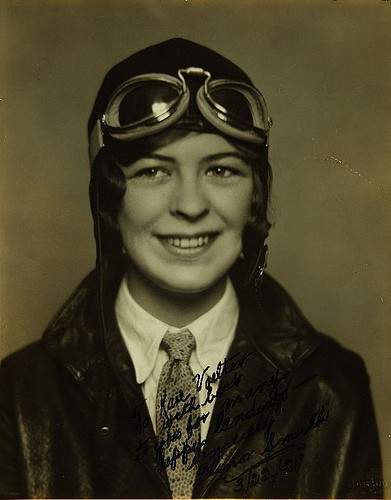
Elinor Smith

Voted “Best Female Pilot” in 1930 by her peers, Elinor set many speed, altitude and endurance records. In 1934, she became the first woman on a Wheaties cereal box. Nicknamed the “Flying Flapper,” Elinor retired from flying for awhile to marry and raise her children, but returned in 1956, flying jets. Her last flight was in 2001, at age 89 when she flew an experimental plane at Langley Air Force Base. Elinor Smith died on March 19, 2010 at age 98.

If you like this post, then please consider sharing it and/or leaving a comment below. Thank you! Barbara Lowell, Children’s Author

A Book For Kids:

41m3iGmxyYL

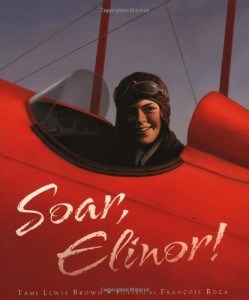
Soar, Elinor!  By Tami Lewis Brown Illustrated by Francois Roca

You may also like: Amelia Earhart Crosses The Atlantic https://barbaralowell.com/amelia-earhart-crosses-atlantic

Harriet Quimby America’s First Female Licensed Pilot https://barbaralowell.com/harriet-quimby-pilot

Barnstorming Bessie Coleman https://barbaralowell.com/barnstorming-bessie-coleman

Photo by San Diego Air & Space Museum Archives

Michelangelo’s Statue Of David

Michelangelo’s David didn’t happen the way you might think. The marble wasn’t a lovely block recently cut from the quarry. And it wasn’t presented to Michelangelo to sculpt into a masterpiece. 

Instead, the giant marble block had been worked on before by two sculptors. Both rejected it. They thought it was too imperfect a piece to sculpt into a stable statue. One or both had also damaged the piece. Even the great Leonardo Da Vinci refused to work on it.

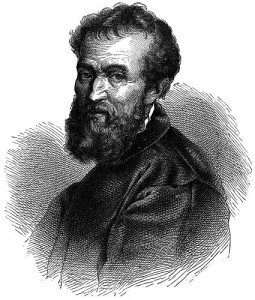
For twenty-five years it lay untouched in the Opera del Duomo’s courtyard in Florence. In 1501, Michelangelo was asked to turn the marble into a statue of the biblical figure David. At 26 years old, he was already a master artist and sculptor.

Michelangelo01

Michelangelo Bounarroti

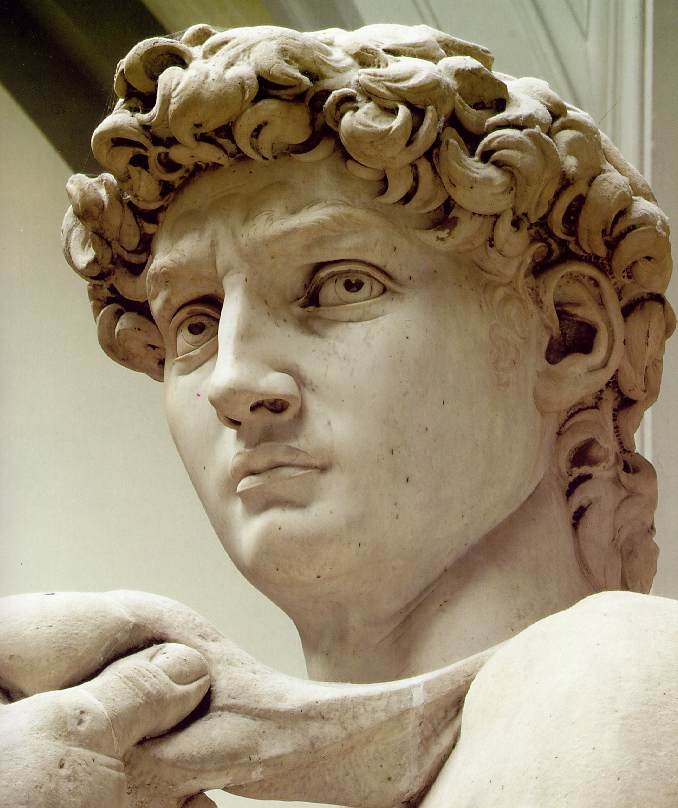
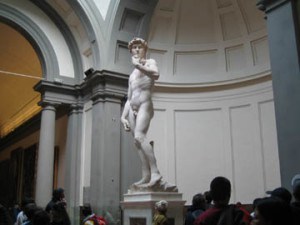
Michelangelo agreed, believing that he could sculpt David from the rough marble. He worked on the statue privately at his workshop hiding it from view. He chipped away for over two years, often with little sleep, focusing solely on his work. Michelangelo successfully transformed the enormous marble block into a work of art. It stands 17 feet tall.  

Florence_italy_duomo

Florence, Italy

In January 1504, he presented his statue to the board members of the Cathedral of Florence. They had commissioned the statue to be placed along the Cathedral’s roofline with other statues. But when they saw Michelangelo’s David they knew it belonged in a prominent place in Florence — one where everyone could see it. The Piazza deel Signoria, Florence’s seat of government was chosen as the site.

In May 1504, forty men worked for four days to move David the half mile from Michelangelo’s workshop to its new home. A witness wrote:

It was midnight, May 14th, and the Giant was taken out of the workshop. They even had to tear down the archway, so huge he was. Forty men were pushing the large wooden cart where David stood protected by ropes, sliding it through town on trunks. The Giant eventually got to Signoria Square on June 8th 1504, where it was installed next to the entrance to the Palazzo Vecchio, replacing Donatello’s bronze sculpture of Judith and Holofernes”.  — From the Galleria dell’ Accademia (Accademia Galley) website at: https://accademia.org 

The statue of  David became a symbol of freedom for the people of Florence. It warned others that Florence would defend itself just as David had defended the Israelites.

Florence_David%20copy

 David at the Accademia Gallery

In 1873, David was moved into the Galleria dell’ Accademia, or Accademia Gallery, to protect it from additional weathering and damage. It stands there today, a magnificent testament to the genius and skill of its sculptor, Michelangelo Buonarroti.

If you like this post, then please consider sharing it and leaving a comment below. Thank you! Barbara Lowell, Children’s Author

You may like: Filippo Brunelleschi, Pippo the Fool https://barbaralowell.com/filippo-brunelleschi-pippo-fool

Books For Kids: Artists https://barbaralowell.com/books-for-kids-artists

A Book For Kids:

61sYaqbdY3L

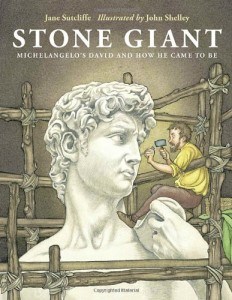
Stone Giant: Michelangelo’s David And How He Came To Be

by Jane Sutcliffe

Illustrated by John Shelley


The Pilot and the Little Prince

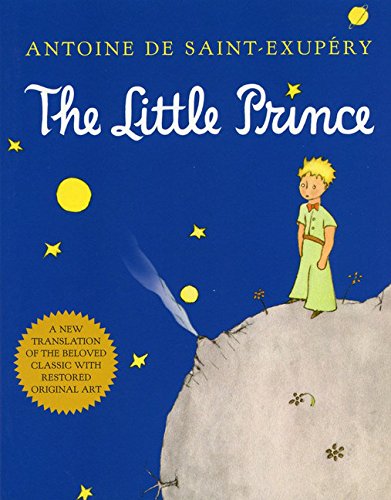
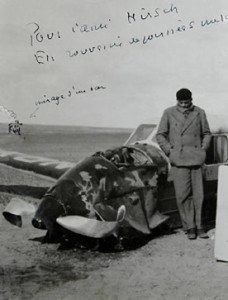
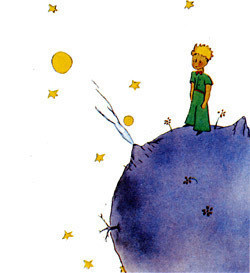
The Little Prince tells the story of a pilot who crash lands his plane in the Sahara Desert. He is awakened his first night there by a little prince fallen to earth from an asteroid. The novella is one of the most popular and endearing books since its publication in 1943. The author, Antoine De Saint-Exupery, a pilot, helped pioneer airmail delivery. And like the pilot in The Little Prince, he crash landed his plane in the Sahara desert, an experience that inspired his writing of The Little Prince.

Antoine, born in Lyon, France in 1900, grew up during the beginning of manned flight. Although the airplane originated in America with the Wright Brothers, it’s popularity took off in France. Antoine was there to see it. When he was twelve, he spent his summer days at an airfield watching pilots fly the early planes. One day, a pilot offered him a ride. And from then on, he dreamed of flying.

17190

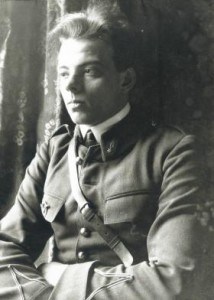
Antoine De Saint-Exupery

Entering military service with the French Army in 1921, Antoine took private flying lessons, and asked to be reassigned as a pilot with the French Air Force. After service, his flying career took off. He heard about an airline that flew mail delivery. Antoine signed up.23_4

Antoine De Saint-Exupery

He flew and delivered the mail in Spain and West Africa. He later lived at Cape Juby, Morocco, in the Sahara Desert, working as a manager at the airfield. Antoine was a talented and courageous pilot who helped search and rescue downed pilots. At Cape Juby, he negotiated pilots’ release from captors.

Sahara_Crash_-1935-_copyright_free_in_Egypt_3634_StEx_1_-cropped

Antoine De Saint-Exupery’s Crashed Plane, Sahara Desert, 1935

Antoine De Saint-Exupery wrote about his flying adventures in his books including, Night Flight and Wind, Sand and Stars. He will always be remembered for his masterpiece, The Little Prince.

standard_standard_saint-exuperyantoine

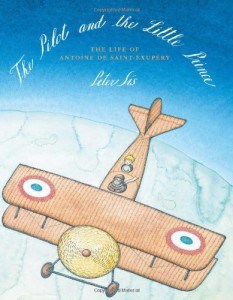
In The Pilot and the Little Prince: The Life of Antoine De Saint-Exupery, master storyteller and illustrator, Peter Sis tells Antoine’s story from his childhood of “sunny days” to the day he went missing while flying for the Free French Air Force in World War II. The Pilot and the Little Prince is an engaging picture book biography for children.

51ZwcPGysSL

The Pilot and the Little Prince: The Life of Antoine De Saint-Exupery

by Peter Sis

If you like this post, then please consider sharing it and leaving a comment below. Thank you! Barbara Lowell, Children’s Author

You may like: Elinor Smith Teenage Flying Flapper https://barbaralowell.com/elinor-smith-teenage-flying-flapper/

Henri Matisse, The Boy Who Became A Painter

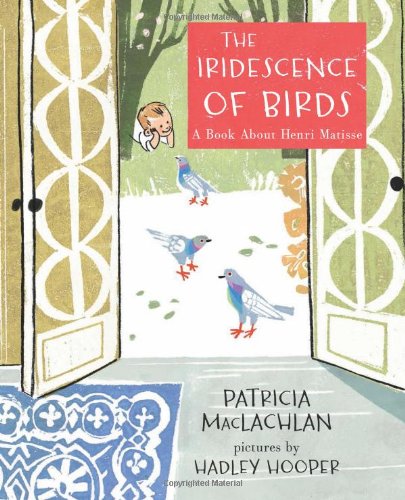
In 234 words, Patricia MacLachlan tells the story of how young Henri Matisse became the master painter of color and light and movement.

Growing up in gray northern France, near the border with Belgium, Henri’s mother Anna Heloise brightened his world with color. She painted porcelain plates with scenes of nature. The plates hung on the walls of their house along with vivid red rugs that also covered a dirt floor. And Henri watched the colors of his pigeon’s feathers shimmer — “iridescence” his mother told him.

In The Iridescence of Birds: A Book About Henri Matisse, Patricia MacLachlan draws a child in by using the second person point of view and asking “ if you” questions, until the child knows, that if you had grown up in Henri Matisse’s world, then you would become a painter, too.

51IoKTqVI4L

 The Iridescence of Birds: A Book About Henri Matisse 

Back Cover Illustrated by Hadley Hooper

tumblr_mskgkaFk2o1rw3fqbo1_1280

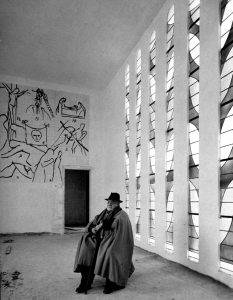
Henri Matisse

Henri Matisse attended law school, passed the bar exam, and with his father’s help found a position as a law clerk — although he did not enjoy practicing law. But everything changed when Henri became ill with appendicitis. While recovering, his mother gave him paints and supplies. It was then that Henri knew he would spend the rest of his life as an artist.            

If you like this post, then please consider sharing it and/or leaving a comment below. Thank you! Barbara Lowell, Children’s Author

To Learn More Visit: http://www.henri-matisse.net/biography.html

You May Like: Books For Kids: Artists https://barbaralowell.com/books-for-kids-artists

Elizabeth Blackwell

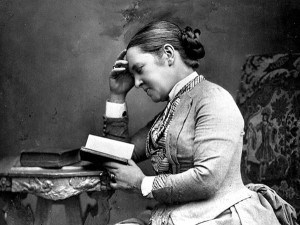
In Who Says Women Can’t Be Doctors? The Story of Elizabeth Blackwell, author Tanya Lee Stone tells how Elizabeth Blackwell’s dream to become a doctor was finally realized. Elizabeth, the first American female to receive a medical degree was rejected by every medical school she applied to, until…

07105024_97009

Elizabeth Blackwell

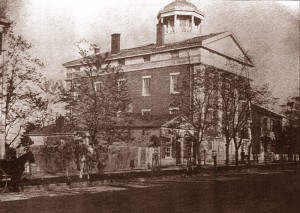
…the students at New York’s Geneva Medical College, thinking their teachers were only joking when they asked if a woman should be admitted, voted to let Elizabeth in. What a surprise when she showed up. Elizabeth outsmarted the entire class graduating with the highest grades in 1849.

Geneva_medical_college_lg

Geneva Medical College

After graduation, Elizabeth was unable to find employment. It seemed that no one wanted to hire a female physician. Elizabeth sailed to Europe for additional training and returned to New York City where she opened her own medical practice.

old-doctorjpg-b51d718fe03de0d7_large

Elizabeth also ran a free clinic teaching hygiene to poor women and children. With her sister Emily, the third American female to receive a medical degree, Elizabeth opened The New York Infirmary for Women and Children. Elizabeth later opened her own medical school at the Infirmary training woman as doctors.

Elizabeth-Blackwell-Quotes-5

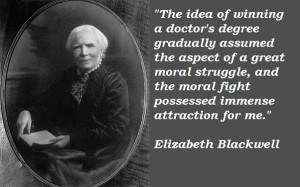
Elizabeth Blackwell persevered and lived her dream, leading the way for American women physicians. 

Who Says Women Can’t Be Doctors?: The Story of Elizabeth Blackwell is a beautifully told picture book biography with engaging illustrations by Marjorie Priceman for children.

If you like this post, then please consider sharing it and leaving a comment below. Thank you! Barbara Lowell, Children’s Author

Visit Author Tanya Lee Stone at: http://www.tanyastone.com
To Learn More:


Wilma Rudolph, Champion Sprinter

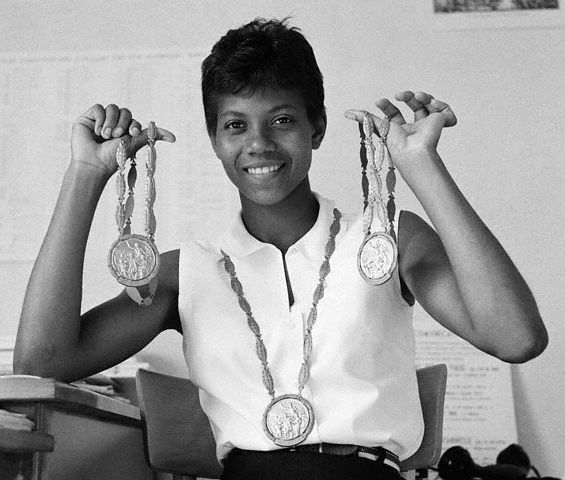
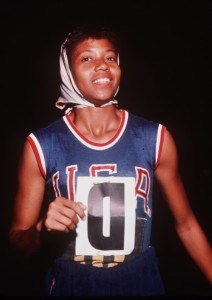
Wilma Rudoph overcame polio as a child to become the fastest female sprinter in the world. She was the first woman to win three Olympic gold medals in a single Olympic Games.

Born premature at 4 and 1/2 pounds, Wilma contracted polio at age four. She wore a brace on her left leg and worked with a physical therapist. Through sheer determination, Wilma walked without the brace by age nine. By age eleven, she no longer needed an orthopedic shoe.

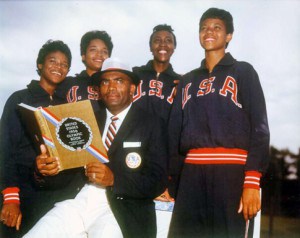
Wilma, one of twenty-two children, loved basketball. With two strong legs, she became a star player at her Tennessee high school. Tennessee State University track and field coach Ed Temple watched Wilma in action. He knew at once that she was a gifted athlete. He first invited her to participate in the Tennessee State summer track and field program. From then on she trained with him.
279997

In 1956, at age sixteen, Wilma became the youngest member of the U.S. Olympic team competing in the Summer Games in Melbourne, Australia. She won a bronze medal in the 4 x 100 m relay.
tumblr_niyv6eMYOO1u8e4ato1_1280

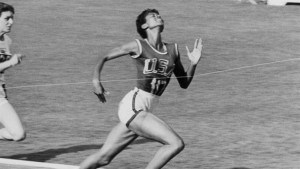
Wilma raced again in the 1960 Summer Olympic Games in Rome. She won and set records in the 200 m  dash and the 4 x 100 m relay and won the 100 m dash. Nicknamed “The Tornado,” at age twenty, Wilma became the “fastest woman in the world.” She was the first woman to win three gold medals in a single Olympic Games — the first Olympic Games to be televised. 

Tigerbelles1960-a

Coach Ed Temple and team, Rome, 1960

“I always had the worst starts in the history of sprinters because of my size [5’11”]. I was the tallest sprinter that ever came from the United States. In my first 35-45 yards, I was never in the race so I was always happy they didn’t have 35-45 yard races. The farther I ran, the faster I became. I could always accelerate at the end and that was the key to the success of Wilma Rudolph, never the start.”

If you like this post, then please consider sharing it and leaving a comment below. Thank you! Barbara Lowell, Children’s Author

A Book For Kids:

51PkTFpsCUL

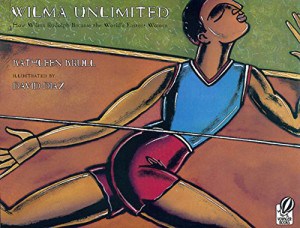
Wilma Unlimited 

By Kathleen Krull, Illustrated by David Diaz

You may like: Books For Kids Kadir Nelson https://barbaralowell.com/books-for-kids-kadir-nelson


Jacques Cousteau

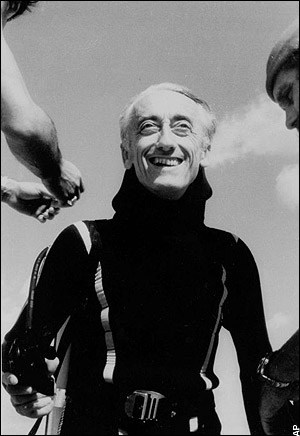
Jacques Cousteau, a man of many talents, was a scientist, inventor, naturalist, explorer, writer, and filmmaker. He had a profound sense of wonder and curiosity about the world. An expert on sea life, he championed its preservation.

When Jacques was a child in France, he loved movies. He saved his allowance and bought a movie camera. With it, he filmed his own movies. They starred his friends, family, and even himself. Later, Jacques served in the French Navy. With his camera along, he traveled the world filming everything he saw.

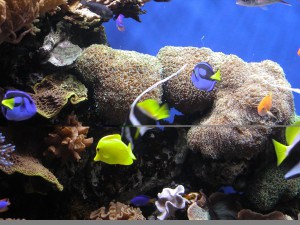
In 1936, a friend gave Jacques a pair of swim goggles. Jacques swam underwater with them. For the first time he saw brilliantly colored fish and fascinating underwater plants and animals. But he could only stay underwater for a brief time. He wanted the ability to breathe and explore freely. 

Underwater-Ocean-Life_HD_for_Iphone_chillcover.com_

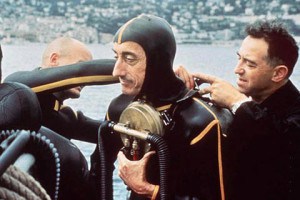
Jacques worked with an engineer and in 1943, he invented Scuba — Self-Contained Underwater Breathing Apparatus. Now he could breathe underwater like a fish. With his camera protected by a waterproof case he filmed the underwater world.

jacques-cousteau

Jacques converted a former Navy mine-sweeper into an ocean going laboratory. He named his ship Calypso. Jacques traveled the world exploring and filming underwater. He captured sea life in over 115 films and in 50 books. He shared his adventures with people everywhere.

6.

To learn more, visit: The Cousteau Society at: https://www.cousteau.org/english/

If you like this article, then please consider sharing it and leaving a comment below. Thank you! Barbara Lowell, Children’s Author

You may like Jane Goodall https://barbaralowell.com/jane-goodall

Books For Kids:

51jViCmpHsL

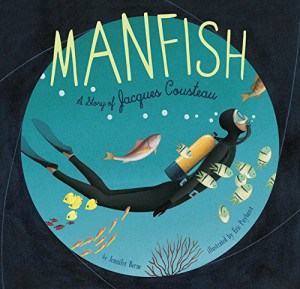
Manfish: A Story of Jacques Cousteau

by Jennifer Berne, Illustrated by Eric Puybaret

41y33zXKKpL

The Fantastic Undersea Life of Jacques Cousteau

 by Dan Yaccarino