Jean Fritz’s History with Humor

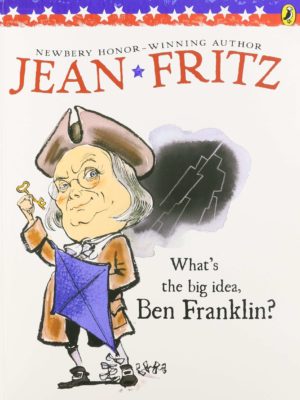
What’s The Big Idea, Ben Franklin?

No matter how busy he was, Ben Franklin always found time to try out new ideas. He was a man of many talents. He was also an ambassador to England, a printer, an almanac maker, a politician, and even a vegetarian (for a time.)
51ia4x0qoyl

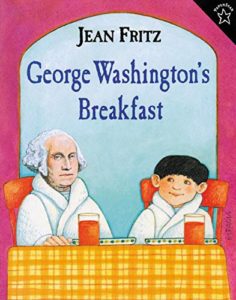
George Washington’s Breakfast

George Washington Allen, a boy who never gives up until he finds out what he wants to know, is determined to learn all there is to know about his namesake, including what the first president ate for breakfast. The humorous story and likeable colored illustrations bring history alive and make research meaningful — Booklist

51u6tdwaywl

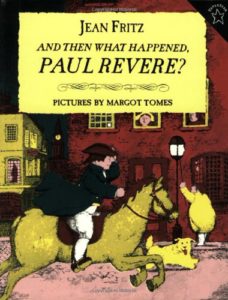
And Then What Happened, Paul Revere?

Everyone knows about Paul Revere’s midnight ride. But not everyone knows the harrowing details and narrow escapes that occurred along the way. This timeless, funny book highlights little-known facts about patriot Paul Revere.
91qt5onz5vl

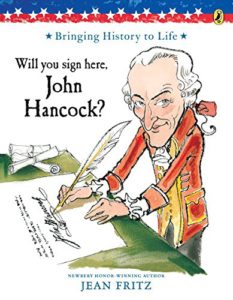
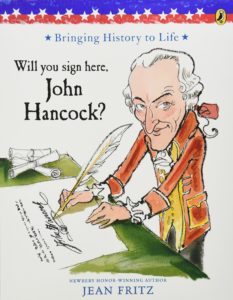
Will You Sign Here, John Hancock?

Everyone knows that John Hancock was one of the first signers of the Declaration of Independence. But not many know that he signed his name so large to show how mad he was about how the colonists had been treated. This fun book highlights little-known facts about this historical figure.
51u8b1-ju-l

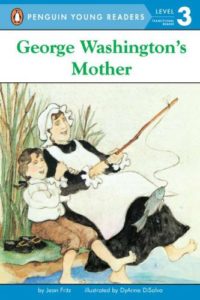
George Washington’s Mother

Everyone has a mother. Even George Washington. But Mary Washington is nothing like you’d think. She hates to dress up. And she always thinks she knows what’s best for George. After all, she’s his mother. You can read more about her in this true story.
512vbqpdafl

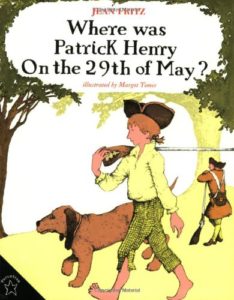
Where Was Patrick Henry On the 29th of May?

Patrick Henry wasn’t particularly well spoken. As a lawyer, he mumbled through some of his early cases. But when the issue was freedom, Patrick Henry was transformed into a natural orator. Jean Fritz makes history come alive as she chronicles the life of a man who moved a nation.
518easqvg9l

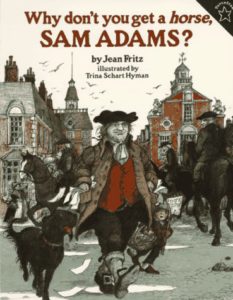
Why Don’t You Get A Horse, Sam Adams?

In early America, when all the men wore ruffled shirts and rode grandly on horseback, one man refused to follow suit. He was the rebel leader Sam Adams, a plainspoken gent who scorned ruffles, refused to ride a horse, and had little regard for the king. 
51jzf6vq6yl

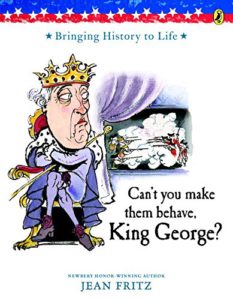
Can’t You Make Them Behave, King George?

Jean Fritz sheds light on the life of England’s King George III. She begins when he was a bashful boy who blushed easily, continues to his early days as king, and examines his role in the American Revolution, when Americans ceased to think of him as good King George. 
51qhvvcx0bl

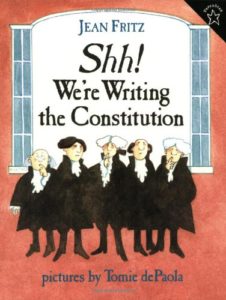
Shh! We’re Writing the Constitution

This factual gem that’s written with Jean Fritz’s humorous touch chronicles the hot summer of 1787 when fifty-five delegates from thirteen states huddled together in the strictest secrecy in Philadelphia to draw up the constitution of the United States.

If you like this article, then please consider sharing it and leaving a comment below. Thank you! Barbara Lowell, Children’s Author

Books descriptions used are primarily from the publishers.

You might like: Books For Kids: George Washington https://barbaralowell.com/books-for-kids-george-washington

Books For Kids: Ben Franklin https://barbaralowell.com/books-for-kids-ben-franklin

Books For Kids: Founding Fathers https://barbaralowell.com/books-for-kids-founding-fathers

Marian Anderson Let Freedom Sing

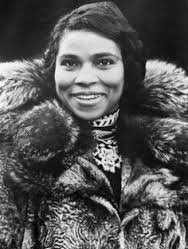
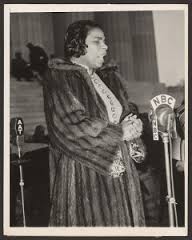
On Easter Sunday, April 9, 1939, Marian Anderson sang before an audience of over 75,000 people at the Lincoln Memorial in Washington, D.C. The free concert was broadcast on the radio to millions.

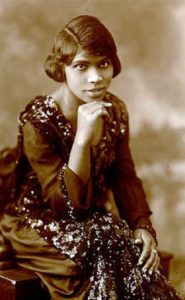
Marian, a child prodigy, considered to be one of the best singers of her time, sang for audiences in America and throughout Europe. She sang for President Franklin Roosevelt and First Lady Eleanor Roosevelt at the White House and at New York City’s Carnegie Hall. But in Washington, D.C., in 1939, it was a different story.

anderson_marian

Marian Anderson

Howard University hoped to have Marian give a concert at Constitution Hall. The sponsors of the hall, The Daughters of the American Revolution, refused. They had instituted a whites only policy. When Americans heard about the refusal, many wrote letters to newspapers in protest, and the First Lady announced her resignation from the DAR.

1953632

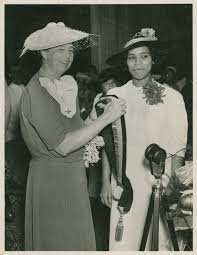
Marian Anderson and Eleanor Roosevelt

When Howard University then asked an all-white school to hold the concert, they refused. Where would Marian be free to sing? According to the FDR Presidential Library, Eleanor Roosevelt worked behind the scenes to insure that the concert would go on. With President Roosevelt’s approval, Secretary of the Interior, Harold Ickes, announced that the concert would be held in front of the Lincoln Memorial.

23838r-240x300

Marian Anderson

On that cold Easter Sunday, Marian sang in her clear, beautiful contralto voice. You can see her initial nervousness and then hear her sing America in the video below.

Marian Anderson sang twice more at the Lincoln Memorial, once in 1952, and again in 1963 at the March on Washington where Dr. Martin Luther, King, Jr. gave his I Have a Dream speech. Marian and Eleanor Roosevelt became good friends.

If you like this post, then please consider sharing it and leaving a comment below. Thank you! Barbara Lowell, Children’s Author

To learn more, visit the FDR Presidential Library at: http://www.fdrlibrary.marist.edu/aboutfdr/anderson.html

You may like Books for Kids: Civil Rights Movement https://barbaralowell.com/books-for-kids-civil-rights-movement

Mahalia Jackson Her Words Changed History https://barbaralowell.com/mahalia-jacksons-words


Books For Kids:

41c8BO82VvL

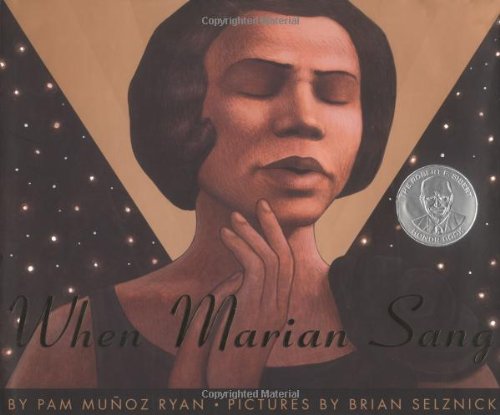
When Marian Sang: The True Recital of Marian Anderson

by Pam Munoz Ryan, Illustrated by Brian Selznick

41ngsw5M-YL._AA160_

Eleanor, Quiet No More

by Doreen Rapport, Illustrated By Gary Kelley


Mozart For Kids

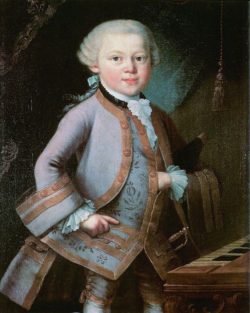
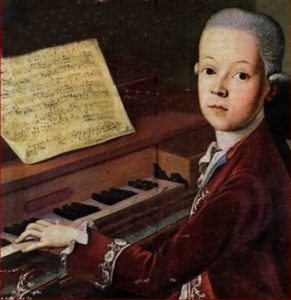
When three year old Wolfgang Amadeus Mozart watched his seven year old sister, Maria Anna, play a keyboard, he imitated her. His father, Leopold Mozart, an Austrian musician in Salzburg, soon recognized his son’s musical ability. Wolfgang it seemed understood music.

youngmozart

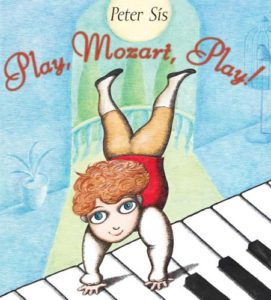
Leopold now tutored both Maria Anna and Wolfgang. He demanded musical perfection, but he also made his lessons fun for his children. In his book, Play, Mozart, Play, Peter Sis writes that Leopold Mozart had the children incorporate music into their play. When the children brought their toys to another room, “one of them carried the toys and the other played a march on the violin.” At age five, Wolfgang could play both the harpsichord and violin. And he composed his first piece of music. Wolfgang soon became proficient on the viola, piano, and organ.

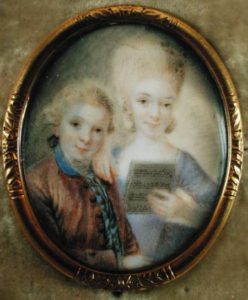
JPH73646 Wolfgang Amadeus Mozart (1756-91) and his sister Maria-Anna, called 'Nannerl' (1751-1829) (ivory) by Alphen, Eusebius Johann (1741-72) ivory Mozart Museum, Salzburg, Austria German, out of copyright

Wolfgang and Maria Anna

When Wolfgang was only six years old, Leopold took him and Maria Anna on their first musical tour, playing for royalty in Munich. They were instantly recognized as child prodigies. Traveling to cities in England, the Netherlands, France, Germany, and Austria, Wolfgang and Maria Anna showed off their musical skills in the European courts.

619ZZD9264L

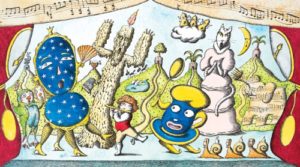
From Play, Mozart, Play

At age eight, Wolfgang composed his first symphony, and at age eleven, his first opera. Leopold took Wolfgang on an extended tour of Italy when he was thirteen. Maria Anna was no longer allowed to perform in public. It was not thought proper for a young woman of seventeen. In Italy, Wolfgang attended a performance in the Sistine Chapel of Miserere, by composer Gregorio Allegri. Remembering the piece later, Wolfgang wrote it down with few mistakes. Young Wolfgang soon composed operas, symphonies, sonatas, and string quartets. He especially loved composing concertos for the violin.

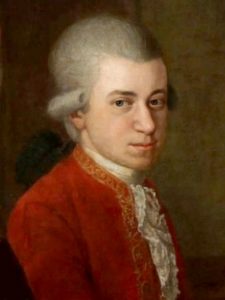
Mozart-by-Croce-1780-81

Over his short lifetime, only thirty-five years, Wolfgang Amadeus Mozart, composed over six hundred pieces of music. He is considered to be one of the world’s most accomplished musicians.

If you like this post, then please consider sharing it and/or leaving a comment below. Thank you! Barbara Lowell, Children’s Author

Books For Kids:

51DSQEB0NJL

Play, Mozart, Play

by Peter Sis


61L9oUrq3VL

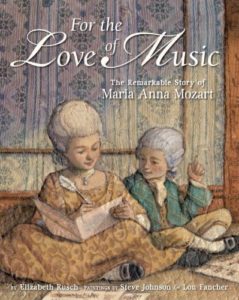
For the Love of Music: The Remarkable Story of Maria Anna Mozart

by Elizabeth Rusch, Illustrated by Lou Fancher


Harriet Quimby, America’s First Female Licensed Pilot

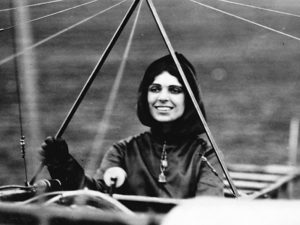
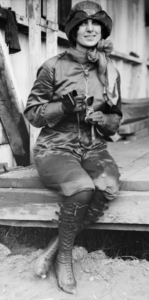
In October 1910, Harriet Quimby watched an air show where top aviators competed. It was The International Aviation Tournament held in Belmont Park, New York. The highlight was an aerial race from the park to the Statue of Liberty. Harriet, known for her love of driving fast cars, decided to learn to fly.

Harriet.quimby

Harriet Quimby

Harriet and her friend Matilde Mosiant took flying lessons in 1911. They were two of the first five students at Matilde’s brother’s school. The famous aviator, Louis Bleriot, trained Harriet’s instructor. Bleriot was the first person to fly solo across the English Channel.   

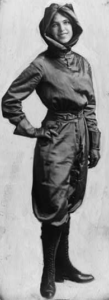
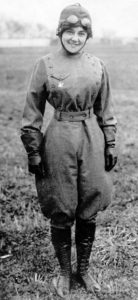
Harriet wrote about her experience flying in Leslie’s Illustrated Weekly, the magazine she worked for. She encouraged women to fly. And to “abandon skirts and don a knickerbocker uniform.” Harriet designed her own flight suit. It was made of purple wool, backed with satin, and included a hood. There were large buttons on the skirt. When buttoned,  they became pantaloons. 

Harriet-Quimby1

Harriet In Her Flight Suit

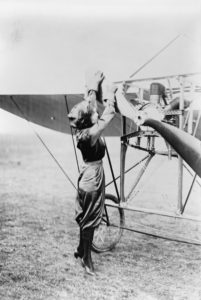
On August 1, 1911, Harriet became the first American woman to earn a pilot’s license. She flew in aerial exhibitions. On September 4, 1911, she became the first woman to fly at night. She flew over a crowd on Staten Island, New York. She was part of the Moisant Aviation Exhibition Team.

Harriet_Quimby_turning_over_plane_propeller

Harriet and Matilde, along with the Moisant team, celebrated the inauguration of the new Mexican president. They were hired to perform in an airshow. According to one of Harriet’s biographers, Matilde dropped roses when she flew over the president’s palace. Harriet and Matilde became the first women to fly over Mexico City.

moisant_m_350

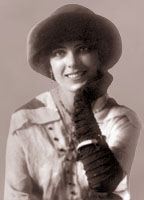
Matilde Moisant

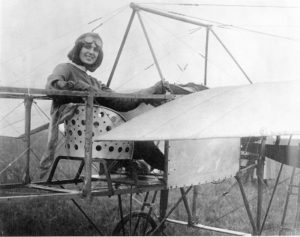
Harriet decided to follow in Louis Bleriot’s footsteps and become the first woman to cross the English Channel. She kept her plan a secret not wanting to invite competition. Harriet sailed to England on March 7, 1912. In France, she met Bleriot. She borrowed one of his monoplanes and had it shipped to England.

On April 16, Harriet took off from Dover, England. She attempted to cross the channel and land in Calais, France. With a compass on her lap, she flew into fog. But she was able to cross the channel successfully. She landed on a beach 25 miles from Calais. The excited beachgoers carried Harriet on their shoulders. 

bleriot-xi-3

As the first woman to pilot a plane across the English Channel, Harriet’s name would have been the top headline in newspapers. But two days before her flight, the “unsinkable” Titanic hit an iceberg and sank. Stories about the Titanic ran for weeks.

Harriet continued flying exhibitions in America. Unfortunately, she, like so many early aviators, died while flying. On July 1, 1912, she flew at the Third Annual Boston Aviation Meet in Squantum, Massachusetts. Harriet and a passenger, William Willard, flew in Harriet’s new Bleriot two-seater. Something went wrong with the plane and Harriet lost control. Both she and Willard died. Harriet was only 37 years old.

297px-Harriet_Quimby_054

Harriet will always be remembered as one of early aviation’s stars. She was the first American woman to receive a pilot’s license and  the first woman to fly solo across the English Channel.

If you like this post, then please consider sharing it and leaving a comment below. Thank you! Barbara Lowell, Children’s Author

To Learn More, Visit the International Women’s Air & Space Museum at: http://www.iwasm.org

You may also like: Amelia Earhart Crosses The Atlantic https://barbaralowell.com/amelia-earhart-crosses-atlantic

Barnstorming Bessie Coleman https://barbaralowell.com/barnstorming-bessie-coleman

Elinor Smith Teenage Flying Flapper https://barbaralowell.com/elinor-smith-flying-flapper

Books For Kids:

51uUQdhxWqL

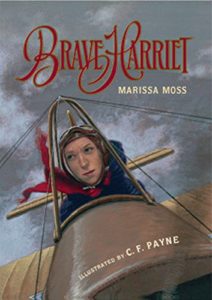
Brave Harriet 

by Marissa Moss, Illustrated by C.F. Payne

81YqNFAnblL

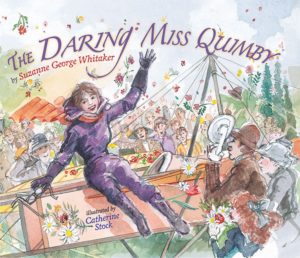
Daring Miss Quimby

by Suzanne George Whitaker, Illustrated by Catherine Stock

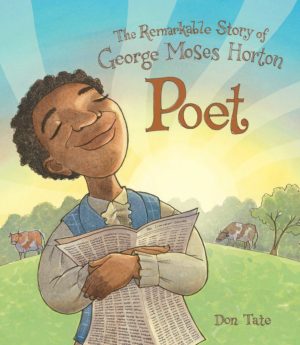
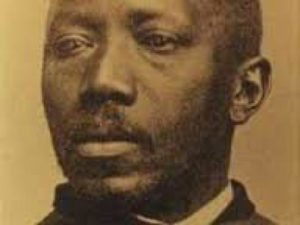
The Remarkable Story of George Moses Horton Poet

Author-Illustrator Don Tate opens his Crystal Kite Award winning book, The Remarkable Story of George Moses Horton Poet with these words: “George loved words. He wanted to learn how to read, but George was enslaved.” 

Don Tate tells the story of George Moses Horton born a slave in North Carolina in the late 1700s. As a child, George listened to the words in songs and in sermons and from the Bible. And he listened to the white children on the plantation recite the alphabet, until he too, could recite it.  But George could not read. It was forbidden for slaves to learn to read.

gmhorton

George Moses Horton

Then, George found a spelling book and taught himself to read. And George read everything he could. It was poetry he loved to read most. So George began to write poems, memorizing them.

I feel myself in need

   Of the inspiring strains of ancient lore,

My heart to lift, my empty mind to feed,

   And all the world explore.

When he was seventeen, George became the property of his master’s son and was taken away from his family. On Sundays, George traveled eight miles to the University of North Carolina’s campus to sell the plantations’ vegetables and fruit. He recited his poetry and students there were amazed that he, a slave, had written them.

I know that I am old

   And never can recover what is past,

But for the future may some light unfold

   And soar from ages blast.

George recited his poems and they were written down by students. He began to sell them for 25 cents and sometimes for clothing. 

I feel resolved to try,

   My wish to prove, my calling to pursue,

Or mount up from the earth into the sky,

   To show what Heaven can do.

A writer, poet, and professor’s wife, Caroline Lee Hentz taught George to write. Now George wrote down the poems he had created and memorized. And through Hentz’s work, George became the first American slave to be published. 

My genius from a boy,

   Has fluttered like a bird within my heart;

But could not thus confined her powers employ,

   Impatient to depart.

George worked out an arrangement with his master, paying him with the money he earned writing and working small jobs. This allowed George to stay at the University and work as a full-time writer. But George was still owned by his master.

She like a restless bird,

   Would spread her wing, her power to be unfurl’d,

And let her songs be loudly heard,

   And dart from world to world. — George Moses Horton, Myself

George continued to write, and in 1829 published a book of poetry, The Hope Of Liberty. George became the first Southern African-American to publish a book. But George could not gain his freedom with the book’s earnings. His master would not allow it. And as the abolitionist movement grew, so did repression in the South. The Hope of Liberty contained anti-slavery material and George knew that now under North Carolina law he could be severely punished if he continued to write against slavery. 

a2546

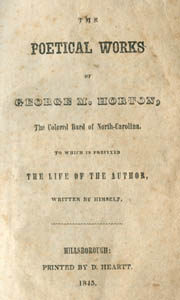
The Poetical Works of George M. Horton about “life, love, death, and friendship” was published in 1845. During the years of the American Civil War, George had to return to work on his master’s farm.  At the end of the war, as a free man, he left the farm and traveled with the 9th Michigan Cavalry Volunteers. As they traveled through North Carolina, George wrote his third poetry collection, Naked Genius, published in 1865.

George lived in Philadelphia until his death in about 1883. The poetry of George Moses Horton is in the public domain and available online.

Don_Tate_Seated

Author-Illustrator Don Tate

Visit him at: http://www.dontate.com

If you like this post, then please consider sharing it and leaving a comment below. Thank you! Barbara Lowell, Children’s Author

You may like: Phillis Wheatley Poet and Slave https://barbaralowell.com/phillis-wheatley-poet-and-slave


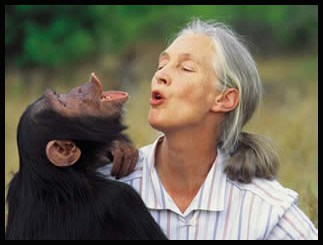
Jane Goodall

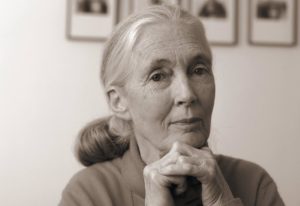
As a young child, Jane Goodall had a toy chimpanzee. She named him Jubilee. When Jane was eight years old, she read The Story of Dr. Doolittle and the Tarzan books by Edgar Rice Burroughs. She dreamed of living in Africa. “I was absolutely fascinated with the idea of being out in the jungle, out with the animals, being a part of it all,” she said later.

jane-goodall

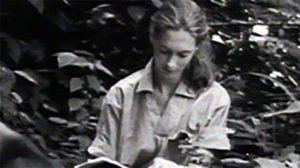
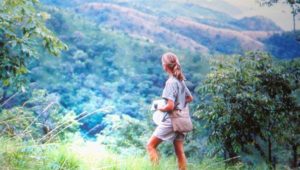
On July 14, 1960, Jane’s dream came true. Famed paleoanthropologist Louis Leakey found in Jane a patient, determined young woman, with the right qualities necessary to study the behavior of chimpanzees in the wild. Jane traveled to the Gombe Stream Game Reserve in Tanzania (then Tanganyika) to record her observations not knowing that her research would be groundbreaking. 

jane-goodall-feat

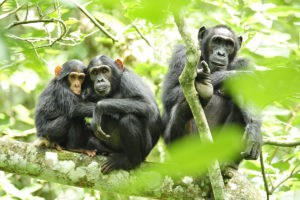
At first, Jane was unable to find chimpanzees or was only aware that they were in the jungle near her. Once she found a high peak that overlooked two valleys, Jane was able to follow the daily interactions and behavior of the chimps through her binoculars. They were aware of her presence and over time expected that she would be there watching them. Through Louis Leakey’s insistence, a filmmaker captured Jane and her observations.

chimpanzees_in_uganda_5984913059

Jane learned that chimps are nomadic in nature, searching over two to six miles a day for food. She learned that mothers and young chimps stay together and that males are not part of child raising. And she watched the chimps spend part of their day resting and grooming each other. 

jane-goodall-birthday-80

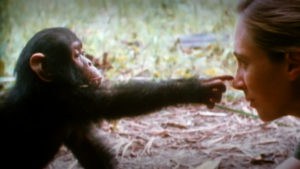
When a small group of chimps let Jane come near them, it was the “proudest and most exciting moment of my life,” she said. Jane named the matriarch of the group, Flo. She observed Flo’s infant, Flint, as he grew and his sister Fifi’s intense interest in him. Fifi often tried to imitate Flo’s gentle mothering. Jane learned that young chimps are deeply curious about the world around them and are intrigued by baby chimps.

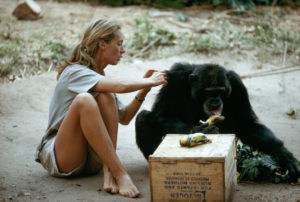
Jane told her staff to signal her if a chimp approached their camp. One day, a male, Jane had observed and named David Graybeard, entered the camp. He grabbed a stalk of bananas from a tent. When Jane was told, she returned and photographed David eating the bananas.  He entered the camp again, and in time other chimps followed. Jane, it seemed, was no longer a perceived threat. 

Jane Goodall grooms the coat of a chimpanzee as he eats a banana in this photo from 1974.
Jane Goodall grooms the coat of a chimpanzee as he eats a banana in this photo from 1974. National Geographic Photo

Jane’s most amazing discovery was that chimps make and use tools. The chimps in the groups Jane studied over three generations, used stalks of grass to dip into holes in the earth to capture termites. They modified these tools by breaking off the ends of the stalks when they became less effective.

Twigs were used as similar tools after their leaves were removed. The chimps also made sponges by wadding up leaves. They dipped the sponges into tree holes that had collected rainwater and then drank from the sponges. Jane also learned that chimps were not solely plant eaters. They hunted and ate mammals, including baboons, bush pigs, antelope, and monkeys. And Jane observed aggression in chimps which made them seem even more like humans to her.

304172860

Jane Goodall lectures around the world stressing the importance of  “creating a balance between humans and the natural world.”   She established the Jane Goodall Institute and Roots and Shoots, a program for children. Visit these programs at: https://www.janegoodall.org

“Only if we understand, can we care. Only if we care, we will help. Only if we help, we shall be saved.” – Jane Goodall

If you like this post, then please consider sharing it and leaving a comment below. Thank you! Barbara Lowell, Children’s Author

You may like, Books For Kids: Jane Goodall  https://barbaralowell.com/books-for-kids-jane-goodall


Kids Books — Scientists

SCIENTISTS

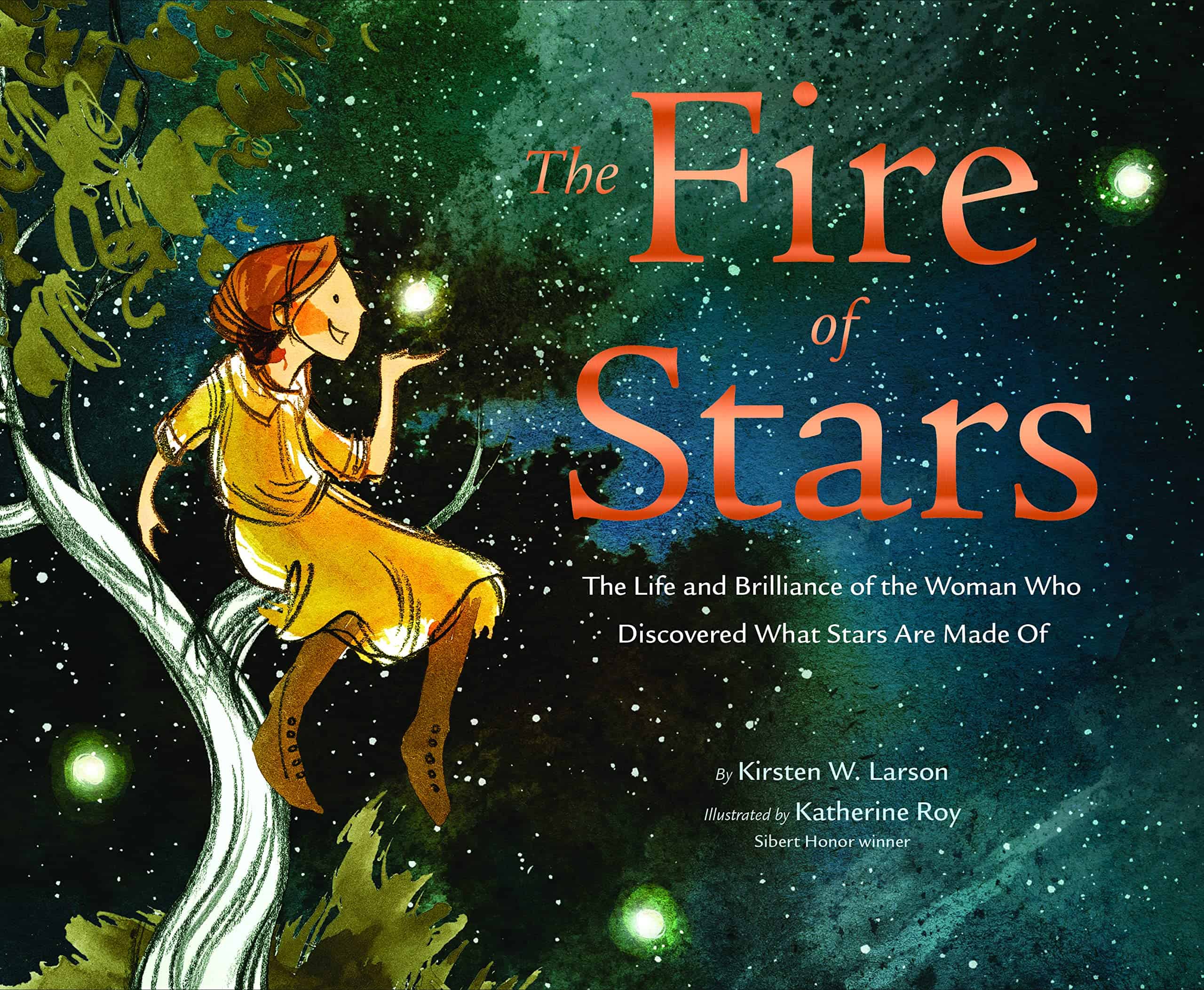
The Fire of Stars: The Life and Brillance of the Woman Who Discovered What Stars Are Made of

By Kirsten W. Larson, Illustrated by Katherine Roy

A poetic picture book celebrating the life and scientific discoveries of the groundbreaking astronomer Cecilia Payne!

Astronomer and astrophysicist Cecilia Payne was the first person to discover what burns at the heart of stars. But she didn’t start out as the groundbreaking scientist she would eventually become. She started out as a girl full of curiosity, hoping one day to unlock the mysteries of the universe. 5-8 years

Maria’s Comet

by Deborah Hopkinson, Illustrated by Deborah Lanino

Maria longs to be an astronomer. She imagines all the strange worlds she can travel to by looking through her papa’s telescope. One night Maria gets her chance. For the first time, she sees the night sky stretching endlessly above her. Her dream of exploring constellations seems close enough to touch. This story is inspired by the life of Maria Mitchell, America’s first woman astronomer.

51QG8oF8WhL._SY480_BO1,204,203,200_

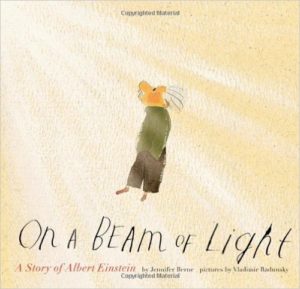
On A Beam Of Light: A Story of Albert Einstein

by Jennifer Berne

Travel along with Einstein on a journey full of curiosity, laughter, and scientific discovery. This is a moving story of the powerful difference imagination can make in any life.

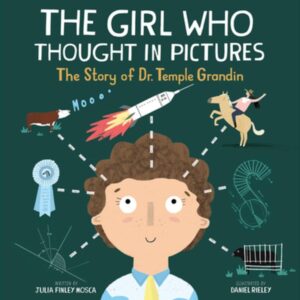
The Girl Who Thought in Pictures

By Julia Finley Mosca, Illustrated by Daniel Rieley

When young Temple was diagnosed with autism, no one expected her to talk, let alone become one of the most powerful voices in modern science. Yet, the determined visual thinker did just that. Her unique mind allowed her to connect with animals in a special way, helping her invent groundbreaking improvements for farms around the globe.
 Inside, you’ll find a complete biography, fun facts, a colorful timeline of events, and even a note from Temple herself.

51rbR3d5Y2L

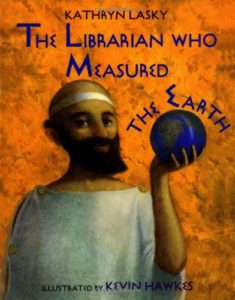
The Librarian Who Measured The Earth

by Kathryn Lasky

This is a colorfully illustrated biography of the Greek philosopher and scientist Eratosthenes. He compiled the first geography book. And accurately measured the globe’s circumference.

Who Was Marie Curie?

By Megan Stine, Illustrated by Ted Hammond

Born in Warsaw, Poland, on November 7, 1867, Marie Curie was forbidden to attend the male-only University of Warsaw, so she enrolled at the Sorbonne in Paris to study physics and mathematics. There she met a professor named Pierre Curie, and the two soon married, forming one of the most famous scientific partnerships in history. Together they discovered two elements and won a Nobel Prize in 1903. Later Marie won another Nobel award for chemistry in 1911. She died in Savoy, France, on July 4, 1934, a victim of many years of exposure to toxic radiation.

41dx%2B0zpwWL

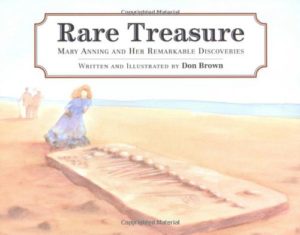
Rare Treasure: Mary Anning and Her Remarkable Discoveries

by Don Brown

Before the word “dinosaur” was ever coined, a young girl discovered a remarkable skeleton on the rocky beach at Lyme Regis in England. This discovery became her passion. She became one of the first commercial fossil collectors. Born in 1799, Mary Anning spent a lifetime teaching herself about fossils. She combed the rugged shore near her home and found a treasure trove of fossils. These long-extinct creatures excited early paleontologists.

81pnp%2B0sm9L

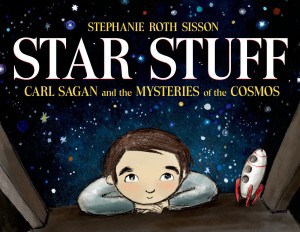
Star Stuff: Carl Sagan and the Mysteries of the Cosmos

by Stephanie Roth Sisson

Young Carl Sagan went to the 1939 World’s Fair. His life was changed forever. From that day on he never stopped marveling at the universe. He sought to understand it better. Star Stuff follows Carl from his days star gazing from his Brooklyn apartment. Through his love of science fiction novels. To his work as an renowned scientist. Carl worked on the Voyager missions exploring the farthest reaches of space.

51PZOVMt9JL

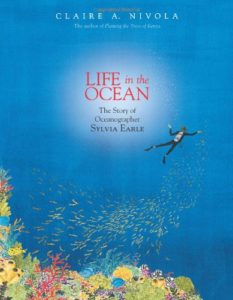
Life in the Ocean: The Story of Oceanographer Sylvia Earle

by Claire Nivola

Sylvia Earle first lost her heart to the ocean as a young girl. She discovered the wonders of the Gulf of Mexico. As an adult, she dives even deeper. She designs submersibles, swims with whales, and takes deep-water walks. Sylvia has dedicated her life to learning more about what she calls “the blue heart of the planet.”

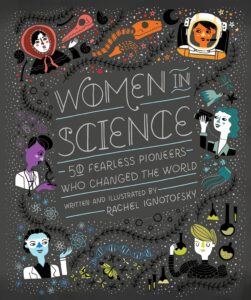
Women in Science: 50 Fearless Pioneers Who Changed the World

By Rachel Ignotofsky

Women in Science highlights the contributions of fifty notable women to the fields of science, technology, engineering, and mathematics (STEM) from the ancient to the modern world. This collection also contains infographics about relevant topics such as lab equipment, rates of women currently working in STEM fields, and an illustrated scientific glossary. The trailblazing women profiled include well-known figures like primatologist Jane Goodall, as well as lesser-known pioneers such as Katherine Johnson, the African-American physicist and mathematician who calculated the trajectory of the 1969 Apollo 11 mission to the moon.

61K250js3oL

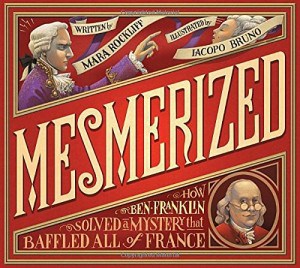
Mesmerized: How Ben Franklin Solved the Mystery That Baffled All of France

by Mara Rockliff, Illustrated by Iacopo Bruno

American inventor Benjamin Franklin is upstaged by a compelling and enigmatic figure: Dr. Mesmer. In elaborately staged shows, Mesmer, wears a fancy coat of purple silk. He carries an iron wand. And he convinces the people of Paris that he controls a magic force. It can cure illness and thoughts. But Ben Franklin is not convinced. Will his practical scientific approach get to the bottom of the mysterious Mesmer’s tricks?

515F%2BAU%2BH-L

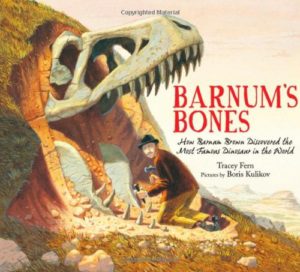
Barnum’s Bones: How Barnum Brown Discovered the Most Famous Dinosaur in the World

by Tracy Fern, Illustrated by Boris Kulikov

Barnum Brown’s parents named him after the circus icon P.T. Barnum. They hoped he would do something extraordinary. And he did! He worked as a paleontologist for the American Museum of Natural History. He discovered the first documented skeleton of the Tyrannosaurus Rex. And most of the dinosaurs on display there today.

The book descriptions used are primarily from the publishers.

If you like this Books For Kids: Scientists, then please consider sharing it and leaving a comment below. Thank you! Barbara Lowell, Children’s Author

You may like Science for Kids https://www.natgeokids.com/uk/category/discover/science/

You may like: Thomas Edison Invented https://barbaralowell.com/thomas-edison-invented

Carl Sagan, the Boy Who Reached for the Stars https://barbaralowell.com/carl-sagan


Emma Lilian Todd Invents an Airplane

Kids Books — Inventors

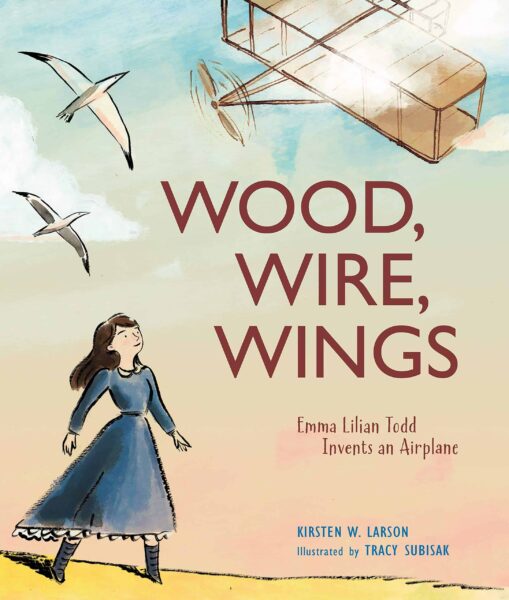
Wood, Wire, Wings: Emma Lilian Todd Invents an Airplane

By Kirsten W. Larson, Illustrated by Tracy Subisak

Emma Lilian Todd’s mind was always soaring–she loved to solve problems. Lilian tinkered and fiddled with all sorts of objects, turning dreams into useful inventions. As a child, she took apart and reassembled clocks to figure out how they worked. As an adult, typing up patents at the U.S. Patent Office, Lilian built the inventions in her mind, including many designs for flying machines. However, they all seemed too impractical.

Lilian knew she could design one that worked. She took inspiration from both nature and her many failures, driving herself to perfect the design that would eventually successfully fly. Illustrator Tracy Subisak’s art brings to life author Kirsten W. Larson’s story of this little-known but important engineer. 7-10 years


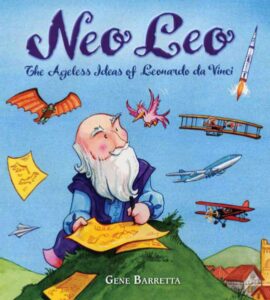
Neo Leo: The Ageless Ideas of Leonardo daVinci

by Gene Barretta

In 1781, Thomas Paine came up with a model for a single-span bridge. In 1887, Adolf Eugen Fick made the first pair of contact lenses. And in 1907, Paul Comu built the first helicopter. But Leonardo da Vinci thought of all these ideas more than five hundred years ago! At once an artist, inventor, engineer, and scientist, da Vinci wrote and drew detailed descriptions of what would later become hang gliders, automobiles, robots, and much more. In Neo Leo, Gene Barretta shows how Leonardo’s ideas — many inspired by his love of nature — foreshadowed modern inventions, offering a window into the future.

51W1Rtdn6NL

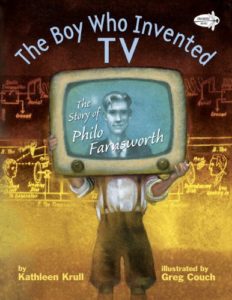
The Boy Who Invented TV: The Story of Philo Farnsworth

by Kathleen Krull, Illustrated by George Couch

Plowing a potato field in 1920, a 14-year-old boy from Idaho saw in the parallel rows of overturned earth a way to “make pictures fly through the air.” This boy was not a magician. He was a scientific genius. Just eight years later he made his brainstorm in the potato field a reality. He transmitted the world’s first television image. 

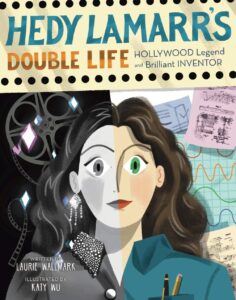
Hedy Lamarr’s Double Life: Hollywood Legend and Brilliant Inventor

By Laurie Wallmark, Illustrated by Katy Wu

To her adoring public, Hedy Lamarr was a glamorous movie star, widely considered the most beautiful woman in the world. But in private, she was something more: a brilliant inventor. And for many years only her closest friends knew her secret. Now Laurie Wallmark and Katy Wu tell the story of how, during World War Two, Lamarr developed a groundbreaking communications system that still remains essential to the security of today’s technology.

61GNL1Wzd5L

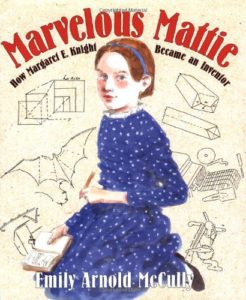
Marvelous Mattie: How Margaret E. Knight Became An Inventor

by Emily Arnold McCully

With her sketchbook labeled My Inventions and her father’s toolbox, Mattie could make almost anything — toys, sleds, and a foot warmer. When she was just twelve years old, Mattie designed a metal guard to prevent shuttles from shooting off textile looms and injuring workers. As an adult, Mattie invented the machine that makes the square-bottom paper bags we still use today.

18693877

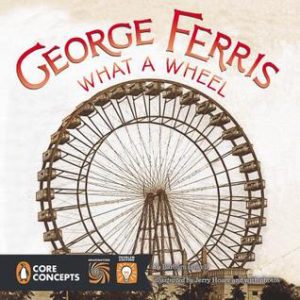
George Ferris What A Wheel

by Barbara Lowell, Illustrated by Jerry Hoare

Have you ever ridden a Ferris wheel? You can see for miles! But when the inventor of the Ferris wheel, George Ferris, first pitched the idea, everyone thought he was crazy. A 250-foot bicycle wheel that goes around and around and can carry 2,160 people in train size cars at the same time? Can’t be done, they said. But George proved them wrong. Teacher Guide available at: https://barbaralowell.com/teacher-guide-2/

71-sJWlxB2L

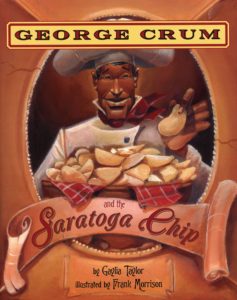
George Crum and the Saratoga Chip

by Gaylia Taylor, Illustrated by Frank Morrison

Who invented the potato chip? George Crum did as a chef in a Saratoga Springs, New York restaurant in 1853. Who knew the potato chip was that old?

511DPru31zL._SX258_BO1,204,203,200_

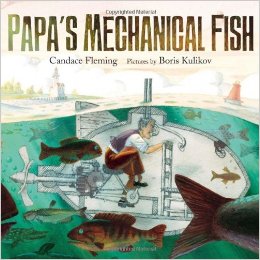
Papa’s Mechanical Fish

by Candace Fleming, Illustrated by Boris Kulikov

Clink! Clankety-bang! Thump-whirr! That’s the sound of Papa at work. Although he is an inventor, he has never made anything that works perfectly. That’s because he hasn’t yet found a truly fantastic idea. But when he takes his family fishing on Lake Michigan, his daughter Virena asks, “Have you ever wondered what it’s like to be a fish? Papa is off to his workshop. With a lot of persistence and a little bit of help, Papa — who is based on the real-life inventor Lodner Phillips — creates a submarine that can take his family for a trip to the bottom of Lake Michigan.

61565z9a6VL._SX411_BO1,204,203,200_

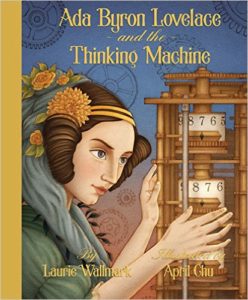
Ada Byron Lovelace and the Thinking Machine

by Laurie Wallmark, Illustrated by Amy Chu

Ada Lovelace, the daughter of the famous romantic poet, Lord Byron, develops her creativity through science and math. When she meets Charles Babbage, the inventor of the first mechanical computer, Ada understands the machine better than anyone else and writes the world’s first computer program.

51bWYYia5rL._SX331_BO1,204,203,200_

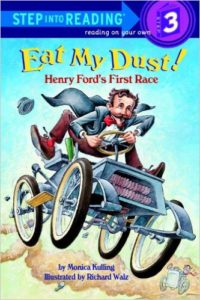
Eat My Dust! Henry Ford’s First Race

by Monica Kulling, Illustrated by Richard Walz

It’s 1901 and Henry Ford wants to build a car that everyone can own. But first he needs the money to produce it. How will he get it. He enters a car race, of course!

51KNklGexvL._AC_UL160_SR121,160_

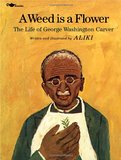
A Weed is a Flower: The Life of George Washington Carver

by Aliki

Award winning author and illustrator Aliki tells George Washington Carver’s story in this beautifully told and illustrated picture book.

41U8zQv2ImL._SX331_BO1,204,203,200_

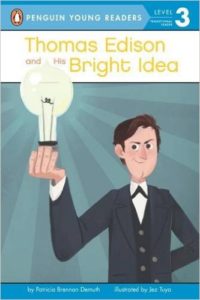
Thomas Edison and His Bright Idea

by Patricia Brennan DeMuth, Illustrated by Jez Tuya

As a curious child who was always asking questions, it’s no wonder Thomas Edison grew up to become a famous, prolific inventor. This easy-to-read nonfiction story follows Edison from his time in school to his career as a full-time inventor. Edison’s discoveries will fascinate and inspire all curious young minds!

51bc-IO3eQL

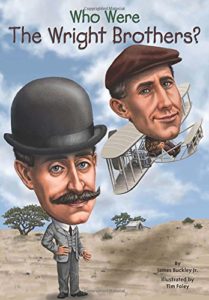
Who Were The Wright Brothers?

by James Buckley, Jr., Illustrated by Tom Foley

As young boys, Orville and Wilbur Wright loved all things mechanical. As young men, they gained invaluable skills essential for their success by working with printing presses, bicycles, motors, and any sort of machinery they could get their hands on. The brothers worked together to invent, build, and fly the world’s first successful airplane. These aviation pioneers never lost sight of their dream to fly and to soar higher!

The book descriptions used are primarily from the publishers.

If you like this post, then please consider sharing it and/or leaving a comment below. Thank you! Barbara Lowell, Children’s Author

You may like: Leonardo Da Vinci Invented https://barbaralowell.com/leonardo-da-vinci-invented

Thomas Edison Invented https://barbaralowell.com/thomas-edison-invented

Ben Franklin Invented Swim Fins https://barbaralowell.com/ben-franklin-invented-swim-fins

Books For Kids — Founding Fathers

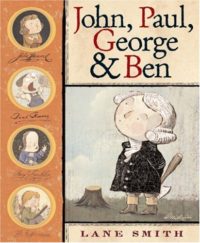
John, Paul, George & Ben

by Lane Smith

Once there were four lads…John [Hancock], Paul [Revere], George [Washington], and Ben [Franklin]. Oh yes, there was also Tom [Jefferson], but he was annoyingly independent and hardly ever around. These lads were always getting into trouble for one reason or another. In other words, they took a few…liberties. And to be honest, they were not always appreciated. This is the story of five little lads before they became five really big Founding Fathers.

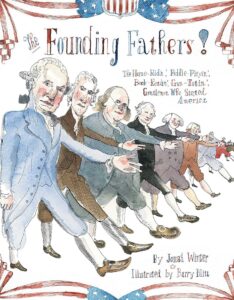
The Founding Fathers!: Those Horse-Ridin’, Fiddle-Playin’, Book-Readin’, Gun-Totin’ Gentlemen Who Started America

By Jonah Winter, Illustrated by Barry Blitt

Tall! Short! A scientist! A dancer! A farmer! A soldier! The founding fathers had no idea they would ever be called the “founding Fathers,” and furthermore they could not even agree exactly on what they were founding! Should America declare independence from Britain? “Yes!” shouted some. “No!” shouted others. “Could you repeat the question?” shouted the ones who either hadn’t been listening or else were off in France having fun, dancin’ the night away.

Slave owners, abolitionists, soldiers, doctors, philosophers, bankers, angry letter-writers—the men we now call America’s Founding Fathers were a motley bunch of characters who fought a lot and made mistakes and just happened to invent a whole new kind of nation. And now here they are, together again, in an exclusive engagement!

Will You Sign Here John Hancock?

by Jean Fritz, Illustrated by Trina Scart Hyman

Everyone knows that John Hancock was one of the first signers of the Declaration of Independence. But not many know that he signed his name so large to show how mad he was about how the colonists had been treated. This witty book highlights little-known facts about this historical figure.

51lPVZSCYpL

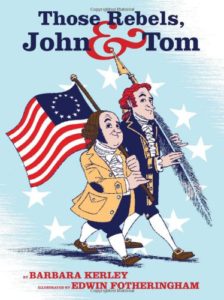
Those Rebels, John & Tom

by Barbara Kerley, Illustrated by Edwin Fotheringham

John Adams & Thomas Jefferson were very different. John was short and stout. Tom was tall and lean. John was argumentative and blunt. Tom was soft-spoken and polite. John sometimes got along with almost no one. Tom got along with just about everyone. But these two very different gentlemen did have two things in common: They both cared deeply about the American colonies, and neither cared much for the British tyrant, King George.
 

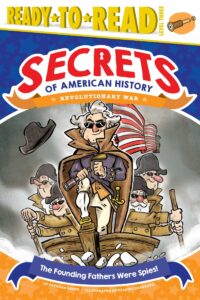
The Founding Fathers Were Spies!

By Patricia Lakin, Illustrated Valerio Fabbretti

Before he was the President of the United States, George Washington was a spy! It’s true…and he wasn’t the only one! During the American Revolution, founding fathers like Alexander Hamilton and Benjamin Franklin sent secret messages rolled up in quill pens, used invisible ink, and wrote in secret codes to keep important information from getting into British hands. In George Washington’s top-secret spy ring, a woman named Anna Strong sent secret messages to other spies by hanging laundry on a clothesline!

Without spies, Americans might still speak with British accents: find out how and why it happened in this book that includes a special extend-the-learning section with activities about the science behind invisible ink, how to make a secret code, and more!

51-6YlXpXrL

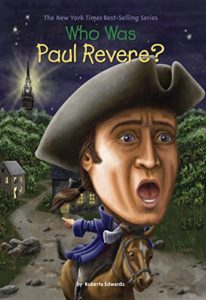
Who Was Paul Revere?

by Roberta Edwards, Illustrated by John O’Brien

In 1775, Paul Revere of Boston made his now-famous horseback ride warning colonists of an impending attack by the British. This event went largely unnoticed in history until Longfellow celebrated it in a poem in 1861. So who was Paul Revere? In addition to being an American patriot, he was a skilled silversmith and made false teeth from hippo tusks! This biography brings to life Paul Revere’s thrilling ride as well as the personal side of the man and the exciting times in which he lived.


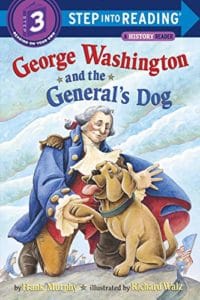
George Washington and the General’s Dog

By Frank Murphy, Illustrated by Richard Walz

Boom! Bang! Guns fire! Cannons roar! George Washington is fighting in the America Revolution when he sees a dog lost on the battlefield. Whose dog is it? How will it find its master? Early readers will be surprised to find out what happens in this little-known true story about America’s first president.

51YniCnRJ5L

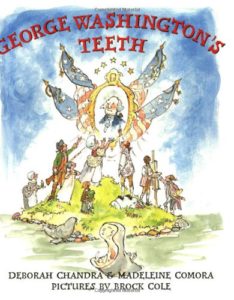
George Washington’s Teeth

by Deborah Chandra & Madeleine Comora, Illustrated by Brock Cole

From battling toothaches while fighting the British to having rotten teeth removed by his dentists, the Father of His Country suffered all his life with tooth problems. Yet contrary to popular belief, George Washington never had a set of wooden teeth. Starting at the age of twenty-four, he lost on average a tooth a year, and by the time he was elected President, he had only two left! In this reverentially funny tale based on Washington’s letters, diaries, and other historical records, readers will find out what really happened as they follow the trail of lost teeth to complete toothlessness.


61zuKVuME5L

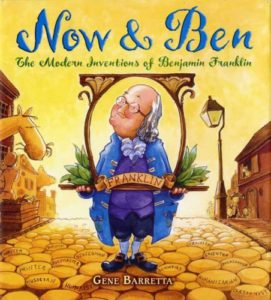
 Now & Ben: The Modern Inventions of Benjamin Franklin

by Gene Barretta

What would you do if you lived in a community without a library, hospital, post office, or fire department? If you were Benjamin Franklin, you’d set up these organizations yourself. Franklin also designed the lightning rod, suggested the idea of daylight savings time, invented bifocals and the odometer — all inspired by his common sense and intelligence.


61ZDKjjz8qL

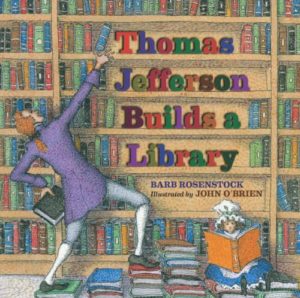
Thomas Jefferson Builds a Library

by Barb Rosenstock, Illustrated by John O’Brien

Imagine owning so many books that you have to build a library to hold them. Thomas Jefferson did. Ever since he was a young boy, Jefferson loved to read and collect books — hundreds at first, then thousands! Books on animals, politics, nature, history. Books in English, French, Greek, and Latin. Jefferson built his first library as a young man and kept on building throughout his life until his book collection helped create the world’s largest library — the Library of Congress in Washington, D.C.


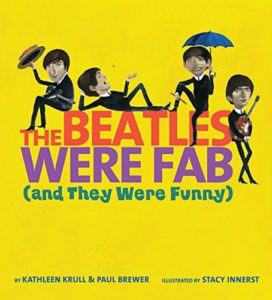
And the other John, Paul, and George with Ringo, too!

518%2BBerDkRL

The Beatles Were Fab (and They Were Funny)

by Kathleen Krull & Paul Brewer, Illustrated by Stacy Innerst

John, Paul, George, and Ringo inspired the world to sing, dance, scream — and laugh. In the 1960s, four lads from Liverpool found themselves on the roller coaster of Beatlemania. And what a ride it was! Their music defined a generation. Their hairstyles sparked a fashion craze. And their goofy sense of humor not only brought joy to their music — it also kept the Beatles going, no matter what fame threw their way.

The book descriptions used are primarily from the publishers.

If you like this post, the please consider sharing it and leaving a comment below. Thank you! Barbara Lowell, Children’s Author

History Channel: https://www.history.com/topics/american-revolution/founding-fathers-united-states

You may like: Books For Kids: Thomas Jefferson https://barbaralowell.com/books-for-kids-thomas-jefferson

Books For Kids: George Washington https://barbaralowell.com/books-for-kids-george-washington

Books For Kids: Alexander Hamilton https://barbaralowell.com/books-for-kids-alexander-hamilton

Books For Kids: American Revolution https://barbaralowell.com/books-for-kids-american-revolution

Books For Kids — Kadir Nelson

Eleven books for kids by award-winning artist, author, and illustrator Kadir Nelson: 

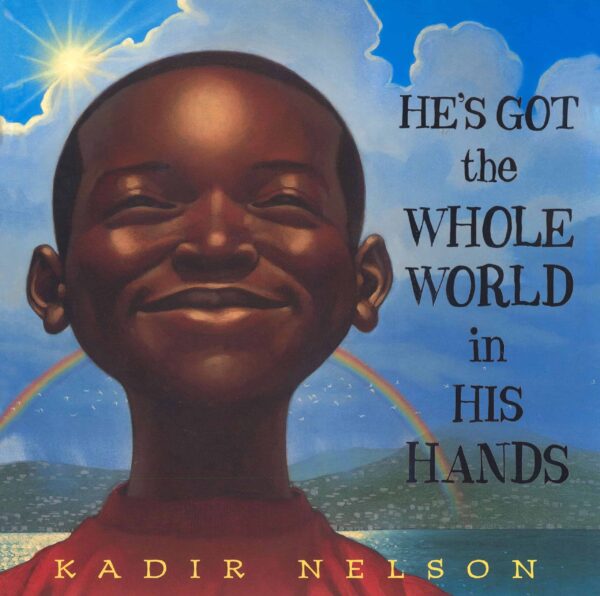
He’s Got the Whole World in His Hands

By Kadir Nelson

What began as a spiritual has developed into one of America’s best-known songs, and now for the first time it appears as a picture book, masterfully created by award-winning artist Kadir Nelson.Through sublime landscapes and warm images of a boy and his family, Kadir has created a dazzling, intimate interpretation, one that rejoices in the connectedness of people and nature.

Inspired by the song’s simple message, Kadir sought to capture the joy of living in and engaging with the world. Most importantly, he wished to portray the world as a child might see it—vast and beautiful.

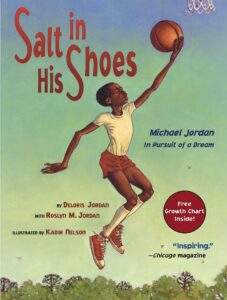
Salt in His Shoes: Michael Jordan In Pursuit of a Dream

by Delores Jordan and Roslyn M. Jordan,

Illustrated by Kadir Nelson

The mere mention of the name conjures up visions of basketball played at its absolute best. But as a child, Michael almost gave up on his hoop dreams. He feared he’d never grow tall enough to play the game that would one day make him famous. That’s when his mother and father stepped in and shared an invaluable lesson. What really goes into the making of a champion is patience, determination, and hard work. 

41v8ZWXzcnL

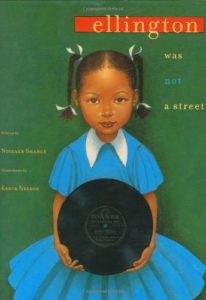
Ellington Was Not A Street

by Ntozake Shange, Illustrated by Kadir Nelson

Noted poet Ntozake Shange recalls her childhood home and the close-knit group of innovators that often gathered there. These men of vision, brought to life in the majestic paintings of artist Kadir Nelson, lived at a time when the color of their skin dictated where they could live, what schools they could attend, and even where they could sit on a bus or in a movie theater. Yet in the face of this tremendous adversity, these dedicated souls and others like them not only demonstrated the importance of Black culture in America, but also helped issue in a movement that “changed the world.”

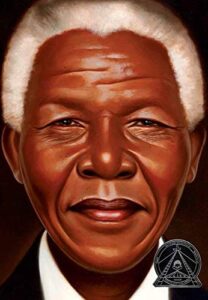
Nelson Mandela

By Kadir Nelson

It is the story of a young boy’s determination to change South Africa, and of the struggles of a man who eventually became the president of his country. Mandela believed in equality for all people, no matter the color of their skin. Readers will be inspired by Mandela’s triumph and his lifelong quest to create a more just world.

Resources in the back include an author’s note and a bibliography listing additional sources for readers who want to find out more. Perfect for sharing at home or in the classroom.

51DEMwbAo6L

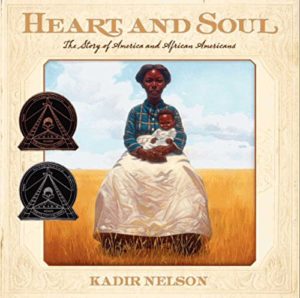
Heart and Soul: The Story of Americans and African Americans

by Kadir Nelson

The story of Americans and African Americans is a story of hope and inspiration and unwavering courage. This is the story of the men, women, and children who toiled in the hot sun picking cotton for their masters. It’s about the America ripped in two by Jim Crow laws. And about the brothers and sisters of all colors who rallied against those who would dare bar a child from an education. This is a story of discrimination and broken promises, determination, and triumphs.
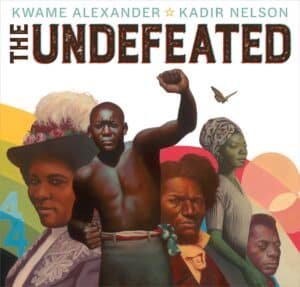
The Undefeated

By Kwame Alexander, Illustrated by Kadir Nelson

Originally performed for ESPN’s The Undefeated, this poem is a love letter to black life in the United States. It highlights the unspeakable trauma of slavery, the faith and fire of the civil rights movement, and the grit, passion, and perseverance of some of the world’s greatest heroes. The text includes references to the words of Martin Luther King, Jr., Langston Hughes, Gwendolyn Brooks, and others, offering deeper insights into the accomplishments of the past, while bringing attention to the endurance and spirit of those surviving and thriving in the present. Back matter provides historical context and additional detail for those wishing to learn more.
513ZfoFIO1L

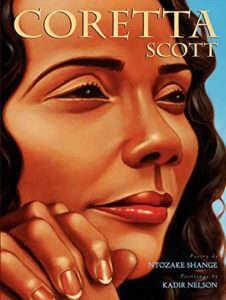
Coretta Scott

by Ntozake Shange, Illustrated by Kadir Nelson

Walking many miles to school in the dusty road, young Coretta Scott knew the unfairness of life in the segregated south. A yearning for equality began to grow. Together with Martin Luther King, Jr., she gave birth to a vision of change through nonviolent protest. It was the beginning of a journey — with dreams of freedom for all.
51fgCPm6FpL

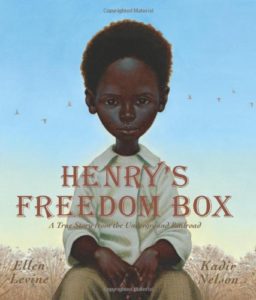
Henry’s Freedom Box: A True Story from the Underground Railroad

by Ellen Levine, Illustrated by Kadir Nelson

Henry Brown doesn’t know how old he is. Nobody keeps records of slaves’ birthdays. All the time he dreams about freedom, but that dream seems farther away than ever when he is torn from his family and put to work in a warehouse. Henry grows up and marries, but he is again devastated when his family is sold at the slave market. Then one day, as he lifts a crate at the warehouse, he knows exactly what he must do: He will mail himself to the North. After an arduous journey in the crate, Henry finally has a birthday — his first day of freedom.

51LbNiluaqL

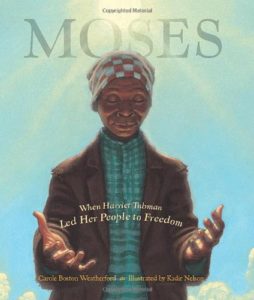
Moses: When Harriet Tubman Led Her People to Freedom

by Carole Boston Weatherford, Illustrated by Kadir Nelson

This poetic book is a resounding tribute to Tubman’s strength, humility, and devotion. With proper reverence, Weatherford and Nelson do justice to the woman who, long ago, earned over and over the name Moses.

A17ULqltC%2BL

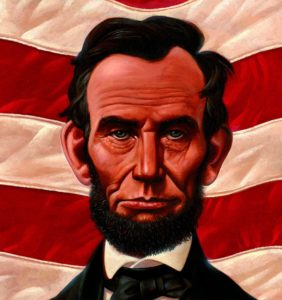
Abe’s Honest Words: The Life of Abraham Lincoln (Big Words)

by Doreen Rappaport, Illustrated by Kadir Nelson

From the time he was a young boy roaming the forests of the unsettled Midwest, Abraham Lincoln knew in his heart that slavery was deeply wrong. A voracious reader, Lincoln spent every spare moment of his days filling his mind with knowledge, from history to literature to mathematics, preparing himself to one day lead the country he loved toward greater equality and prosperity.

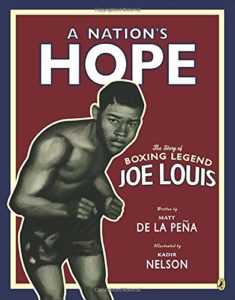
A Nation’s Hope: The Story of Boxing Legend Joe Louis

by Matt De La Pena, Illustrated by Kadir Nelson

On the eve of World War II, African-American boxer Joe Louis fought German Max Schmeling in a bout that had more at stake than just the world heavyweight title. For much of America, their fight came to represent America’s war with Germany. This elegant and powerful picture book biography centers on this historic fight in which the American people came together to celebrate our nation’s founding ideals.

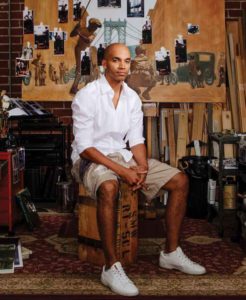
Visit Kadir Nelson at: http://kadirnelson.com

The book descriptions used are primarily from the publishers.

If you like this post, then please consider sharing it and leaving a comment below. Thank you! Barbara Lowell, Children’s Author

You may like: Kids Books Andrea Davis Pinkney https://barbaralowell.com/kids-books-andrea-davis-pinkney

Kadir%20headshot%20crop%20for%20web